
Blog
Best Kitchen Appliances for Resellers

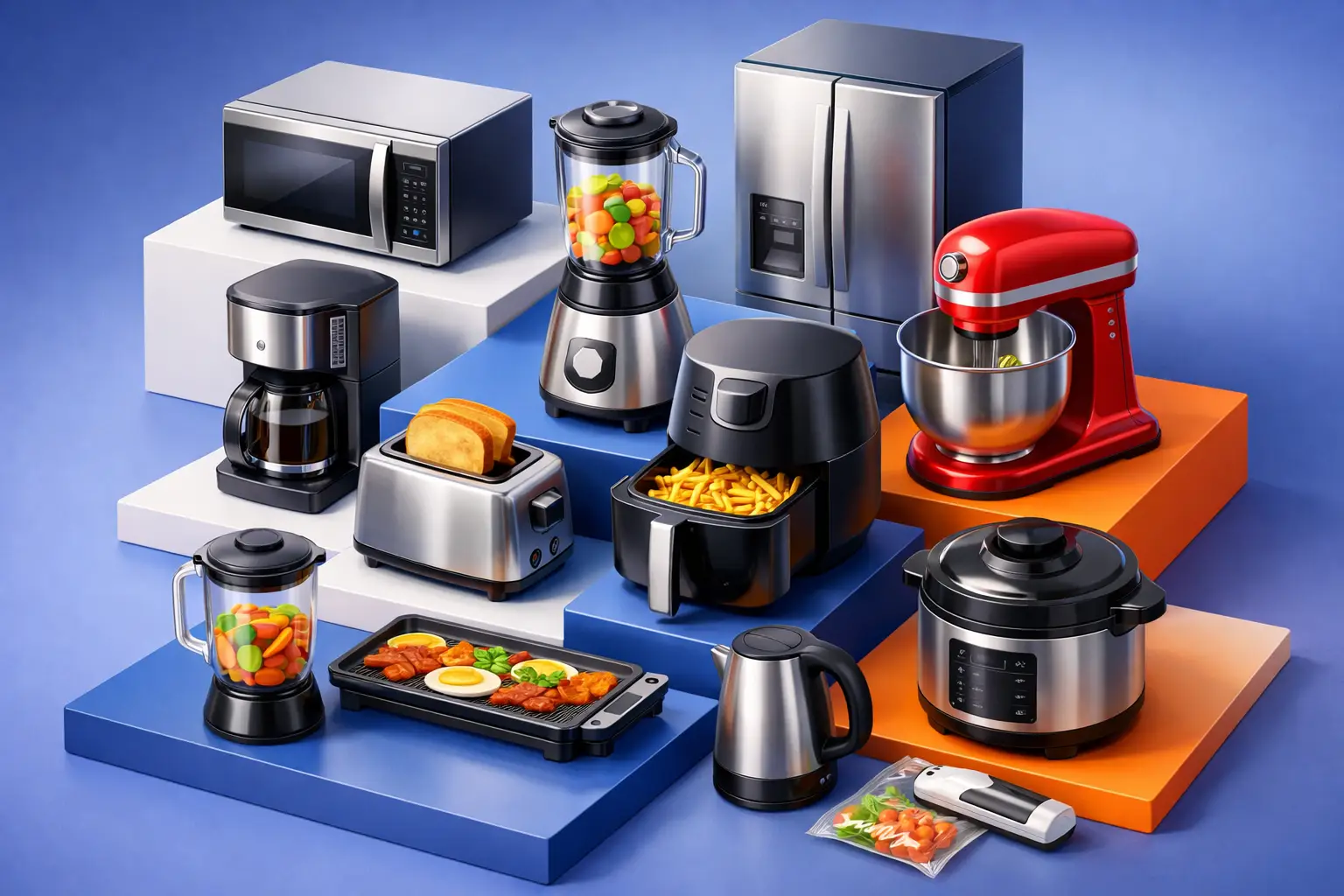
Stocking the wrong appliance ties up cash fast. A slow-moving product can sit in storage for months, eat into margin, and create warranty headaches that are not worth the order. That is why choosing the best kitchen appliances for resellers is less about chasing trends and more about picking products that move consistently, solve everyday problems, and hold up after the sale.
For most resellers, the sweet spot is not the most expensive appliance or the cheapest one. It is the model that gives customers a clear benefit, looks modern on the shelf or online, and comes with specs people understand right away. Capacity, wattage, ease of cleaning, safety features, and warranty support matter because they help close sales faster and reduce complaints later.
What makes the best kitchen appliances for resellers?
A product becomes reseller-friendly when demand is broad, the use case is simple, and the price feels easy to justify. Customers do not need a long explanation for an air fryer, food processor, or water dispenser. They already understand the value or can see it in seconds.
Margin also matters, but margin alone is not enough. A high-margin product that barely moves is usually worse than a mid-margin product with steady repeat demand. The best kitchen appliances for resellers usually share four traits: practical daily use, attractive design, reliable performance, and local warranty confidence.
In the UAE market, another factor matters just as much – fast fulfillment. Buyers expect quick delivery, and resellers need suppliers that can replenish stock without delays. If restocking is inconsistent, even a strong product can become difficult to scale.
Air fryers are still one of the safest bets
Air fryers continue to lead because they are easy to sell to families, apartment residents, and health-conscious buyers. The value proposition is simple: faster cooking, less oil, easy cleanup, and a compact footprint. That message works online, in-store, and in wholesale conversations.
For resellers, capacity is where product selection gets smarter. Smaller units can appeal to singles and couples, while larger basket or dual-compartment models attract family buyers. If your audience is price-sensitive, a mid-capacity model with straightforward controls usually performs better than a premium unit packed with features people may never use.
The trade-off is competition. Air fryers are popular, which means many sellers carry them. To protect margin, focus on models with visible selling points such as clear digital controls, strong wattage, nonstick baskets, and official warranty coverage. Products that feel premium without moving too far up in price tend to sell fastest.
Food processors offer strong upsell potential
Food processors are a good category for resellers who want slightly higher ticket value without stepping into hard-to-explain products. Buyers understand the convenience immediately. Chopping, slicing, shredding, and mixing are everyday tasks, and a multifunction machine reduces prep time.
This category works especially well for households that cook regularly and want one appliance to handle multiple jobs. It also performs well in bundle-style selling, where a reseller positions the food processor as part of a kitchen upgrade set.
What matters most here is practical power. Customers look at motor strength, bowl capacity, blade quality, and whether the unit is easy to assemble and clean. A food processor with too many attachments can look impressive, but if storage becomes an issue, some buyers hesitate. For better sell-through, balanced models usually beat overbuilt ones.
Stand mixers and hand mixers serve different price bands
Mixers are dependable sellers, but the right format depends on your customer base. Hand mixers are easier to move at volume because they are affordable, compact, and familiar. They work well for first-time kitchen buyers, apartment residents, and shoppers who bake occasionally.
Stand mixers target a more committed buyer. They can deliver higher order value and a stronger premium look, but they also require better product presentation. Customers want to know bowl capacity, motor power, speed settings, and whether the appliance feels stable during use.
For resellers, this category is about range planning. Carrying both a practical hand mixer and a more premium stand mixer can help you capture two different customer groups. If budget is limited, hand mixers are usually the safer starting point because they move faster and require less selling effort.
Choppers win on simplicity and impulse demand
If you want a product that is easy to understand and easy to move, choppers deserve attention. They solve a very specific problem fast: cutting onions, vegetables, herbs, and basic ingredients without the mess and time of manual prep.
Choppers often appeal to buyers who may not want a full food processor. They take up less space, cost less, and fit daily cooking habits. That makes them strong for both retail shelves and online listings where simple product benefits matter.
The downside is average order value. Choppers are usually lower-ticket items, so they work best as a volume category or add-on sale. They are especially effective when sourced at direct wholesale pricing, where even modest margins can become worthwhile through turnover.
Water dispensers bring stable, practical demand
Not every strong reseller product needs to sit on the kitchen counter. Water dispensers remain a solid category because they serve homes, offices, staff accommodations, and shared living spaces. Demand is practical and ongoing, not trend-driven.
This category attracts buyers who prioritize convenience and daily utility. Hot and cold functionality, child safety features, storage cabinet design, and energy efficiency all help justify the purchase. For office and bulk buyers, reliability matters even more than style.
Water dispensers do require more attention around logistics, after-sales support, and installation expectations. They are larger items, so storage and delivery planning matter. Still, for resellers with the right supply setup, they can be one of the more dependable categories because they solve a basic need and appeal to both household and commercial buyers.
How to choose products that actually resell well
The fastest way to make better buying decisions is to think like your customer, not like a catalog. Ask what problem the appliance solves, how often it will be used, and whether the buyer can understand the benefit in under a minute.
A good reseller product usually has visible value. A 6-liter air fryer sounds useful. A multifunction food processor with stainless blades feels practical. A hot and cold water dispenser with safety lock is easy to position. Clear benefits create faster decisions.
It also helps to avoid products that are too niche unless you already know the audience. Specialty appliances can look attractive because they face less competition, but they often move slower. Everyday-use products tend to be the stronger commercial choice.
Features that protect margin after the sale
Resellers often focus on sales velocity and forget the cost of returns, complaints, and damaged reputation. That is where product quality and warranty support become real business factors, not marketing extras.
Look for appliances with stable construction, simple controls, and easy-to-clean parts. Products that are too complicated can create avoidable support issues. Official warranty coverage also matters because it builds buyer trust and reduces the pressure on the reseller to handle every issue alone.
This is one reason many trade buyers prefer working with suppliers that combine practical product lines with local support. A supplier like LIGHT PERFECT TRADING L.L.C, through perfectbazzar.com, fits this model by focusing on fast delivery across UAE, direct wholesale pricing, and official warranty-backed appliances in categories that already have broad demand.
The product mix that makes the most sense
If you are building or expanding an appliance resale business, a balanced mix usually performs better than an oversized catalog. Air fryers bring broad appeal. Food processors raise basket value. Hand mixers and choppers give you faster-moving entry price points. Water dispensers add practical demand from both homes and offices.
That mix covers different budgets and buying situations without becoming difficult to manage. It also gives you room to test demand patterns. In some areas, compact appliances may move faster because of apartment living. In others, larger family-capacity units may perform better.
The key is not choosing the most products. It is choosing products with a clear use case, reliable quality, and pricing that leaves room for resale without making the end customer hesitate.
Resellers do best when they stock appliances people already want and can trust. If the product saves time, looks good, feels fairly priced, and comes with dependable support, it has a much better chance of turning into repeat business instead of leftover inventory.