
Blog
10 Best Food Choppers for Onions

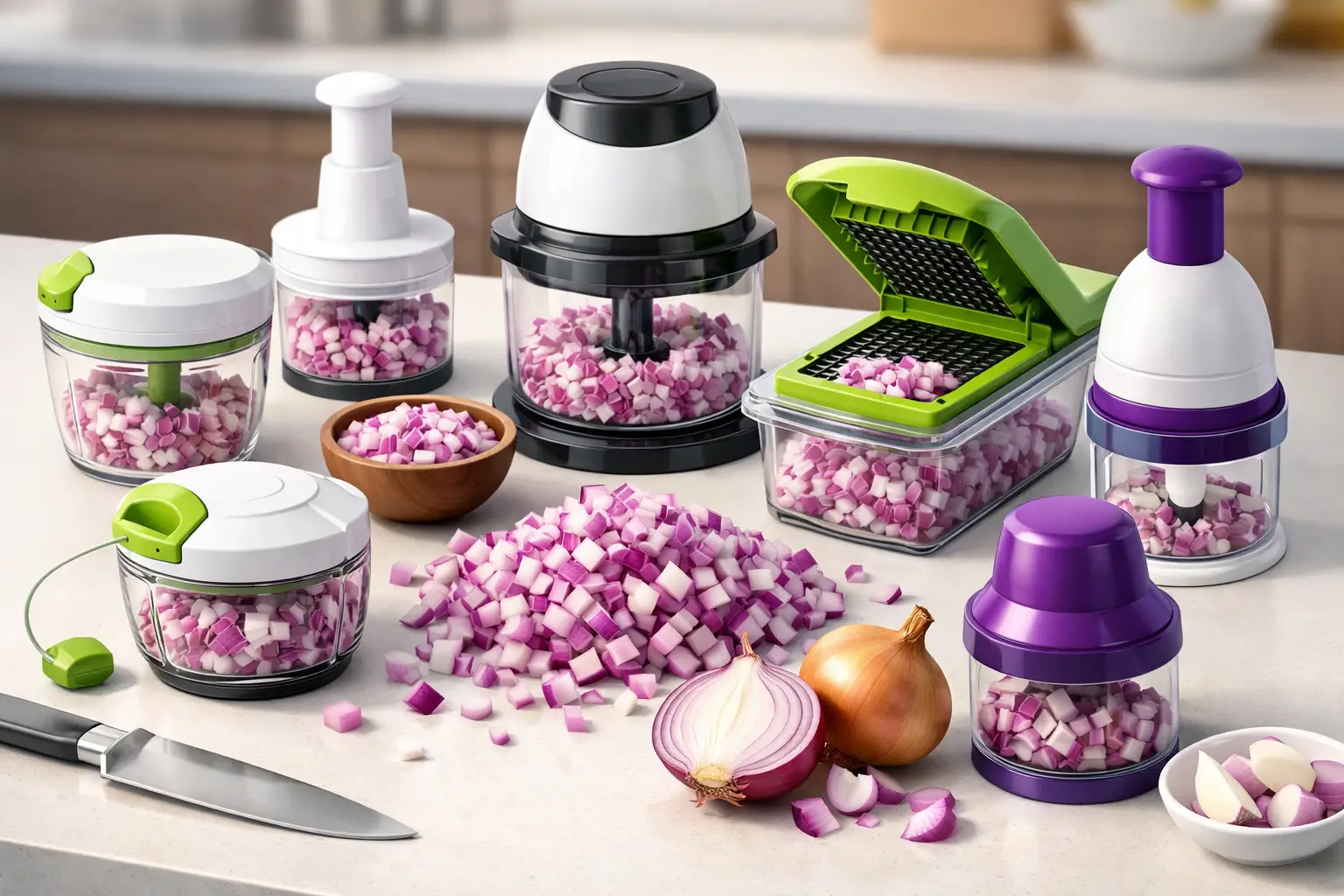
One onion can slow down an entire meal. You start with good intentions, then the board gets wet, your eyes start burning, and suddenly a quick dinner feels like extra work. That is exactly why so many shoppers look for the best food choppers for onions instead of relying on a knife every time. A good chopper cuts prep time, keeps pieces more consistent, and makes everyday cooking easier.
For most kitchens, the right choice comes down to how often you cook, how much onion you prep at once, and whether you want a manual tool or an electric appliance. Price matters, but so do blade quality, bowl size, cleaning, and how well the unit handles hard vegetables without jamming. If you are buying for a family kitchen, a small apartment, an office pantry, or even for resale, those details make the difference between a product that gets used daily and one that stays in the cabinet.
What makes the best food choppers for onions
Onions are not soft like tomatoes and not dry like nuts. They are firm, layered, and full of moisture, so a weak chopper can crush them instead of cutting them cleanly. That usually leaves you with uneven chunks, extra liquid, and more mess than you started with.
The best food choppers for onions usually share a few practical traits. Sharp stainless steel blades matter first, because they need to slice through layers cleanly instead of tearing them. A stable base or secure bowl matters next, especially if you are working fast during dinner prep. Capacity also matters more than many people expect. A unit that is too small forces you to work in batches, while a unit that is too large can feel inconvenient for quick use.
Motor strength is important on electric models, but not every buyer needs high wattage. If your main job is chopping onions, herbs, and garlic, a compact electric chopper can be enough. If you also want to handle carrots, nuts, or meat, you will need something stronger with more durable blades and a better bowl design.
Manual or electric: which type is better?
This choice depends on your kitchen habits more than your budget. Manual onion choppers are popular because they are compact, easy to store, and fast to use for one or two onions at a time. In smaller kitchens, they make sense. They also appeal to buyers who want a low-maintenance tool without cords, motors, or extra attachments.
The trade-off is effort and flexibility. Manual models usually do one job well, but they are less useful when prep volume increases. If you cook for a large family, meal prep in bulk, or want to chop multiple ingredients in one session, an electric model is usually the smarter buy.
Electric food choppers offer better speed and less physical effort. They are especially useful when you need consistent results or want a multi-use appliance for onions, vegetables, sauces, and small prep tasks. The downside is that some models overprocess if the pulse control is not precise. That is why control matters just as much as power.
The 10 best food choppers for onions to consider
1. Compact manual press chopper
This is the simple choice for quick onion prep. A press-style manual chopper with grid blades works well for diced onion and takes very little storage space. It suits apartment kitchens, occasional cooks, and shoppers who want the lowest-cost option.
The limitation is capacity. You may need to cut larger onions into sections first, and very hard vegetables can require more force.
2. Pull-cord manual chopper
A pull-cord model gives you more control over texture than a fixed press chopper. A few pulls create rough onion pieces, while more pulls create a finer chop. That makes it a flexible option for salsa, curry bases, and general daily cooking.
Look for a strong lid mechanism and durable cord housing. Cheap versions often fail there first.
3. Mini electric chopper with 1 to 2 liter bowl
For many homes, this is the best balance of convenience, price, and performance. A mini electric chopper handles onions quickly, reduces tears, and works well for garlic, chilies, and herbs too. It is ideal for daily use without taking over the countertop.
This type is often the best fit for households that want practical results and easy cleanup rather than a large, expensive processor.
4. Glass-bowl electric chopper
A glass bowl adds weight and stability, which helps when chopping onions and other firm ingredients. It also resists staining and odor better than some plastic bowls. Buyers who care about durability often prefer this style.
The trade-off is weight. It feels more premium, but it is less portable and slightly less convenient to move and store.
5. Stainless steel bowl chopper
This is a strong option for frequent users, busy kitchens, and wholesale buyers looking for durable stock. A stainless steel bowl is tough, modern-looking, and less breakable than glass. It suits kitchens where the appliance gets regular use.
Check the lid fit and blade assembly carefully. Bowl material is only one part of overall quality.
6. Multi-function food chopper with two-speed control
If onions are only part of the job, a two-speed model gives more flexibility. Lower speed helps avoid turning onions into mush, while higher speed helps with tougher ingredients. This type suits buyers who want one appliance for several prep tasks.
It costs more than basic models, but it often replaces the need for separate small appliances.
7. High-capacity family-size chopper
Large households and batch cooks benefit from a bigger bowl. If you regularly prepare biryani, stew bases, or meal prep packs with several onions at once, higher capacity saves time. It also reduces repeated loading and emptying.
The drawback is storage. A larger model makes sense only if you use that capacity regularly.
8. Battery-powered portable chopper
Portable choppers are useful for light prep, small kitchens, and situations where cord-free convenience matters. They can work for onion halves or smaller quantities and are easy to keep tucked away.
Still, they are not always the best long-term option for heavy onion prep. Battery life and torque vary a lot between models.
9. Heavy-duty electric prep chopper
This is the better choice for frequent cooks, serious home kitchens, and small food businesses. A heavy-duty model with a stronger motor and reinforced blades handles onions, carrots, nuts, and more without struggling. It is built for repeat use and better consistency.
For some buyers, this is more machine than they actually need. If you only chop one onion a few times a week, it may be unnecessary.
10. Value-focused branded chopper with warranty
A well-priced chopper backed by an official warranty is often the smartest purchase, especially in markets where local after-sales support matters. Performance matters, but so does dependable ownership. That is why many buyers prefer proven kitchen appliance sellers such as LIGHT PERFECT TRADING L.L.C, where practical specs, fast delivery, and warranty coverage support the purchase.
For both home users and resellers, value is not just about the price tag. It is about what happens after the box is opened.
Features worth checking before you buy
Blade design should be your first checkpoint. Dual-layer stainless steel blades usually chop onions more evenly than basic single-blade setups. Bowl locking also matters because onion prep can create moisture and movement. A secure fit keeps operation cleaner and safer.
Pulse control is especially useful on electric models. Onions can go from chopped to watery very quickly, so short controlled bursts are better than one long run. If the unit has only one aggressive speed, it may not give you the texture you want.
Cleaning should not be treated as a minor detail. If the lid traps onion smell, or if blades are difficult to remove, the chopper becomes annoying to use. Dishwasher-safe parts help, but even then, easy assembly and smooth surfaces make a difference in daily use.
Noise is another factor that gets overlooked. Compact electric choppers are convenient, but some are surprisingly loud for their size. In apartments or shared spaces, that can matter more than buyers expect.
Who should buy which type?
If you cook only a few times a week and mainly want help with onions, garlic, and small vegetables, a manual press chopper or mini electric model is usually enough. These are affordable, easy to store, and practical for daily cooking.
If you cook for a family, prepare larger meals, or want one appliance for multiple ingredients, an electric chopper with stronger power and a medium-to-large bowl is the better investment. It saves more time over the long run and handles a wider range of prep work.
If you are buying for office use, staff accommodation, furnished apartments, or resale, durability and warranty support should move higher on your list. A slightly higher upfront cost often delivers better reliability, which matters more in repeated-use environments.
A smart buy is not always the biggest model
Many shoppers assume the best unit must be the most powerful or the most expensive. In practice, the best food choppers for onions are the ones that match real kitchen habits. A compact, well-made chopper that is easy to clean and reliable every day will usually outperform a larger machine that feels inconvenient to use.
Choose for the way you actually cook. If a chopper saves time, cuts cleanly, and makes onion prep less frustrating, it is already doing exactly what a good kitchen appliance should do.