
Blog
Wholesale Appliances for Small Retailers

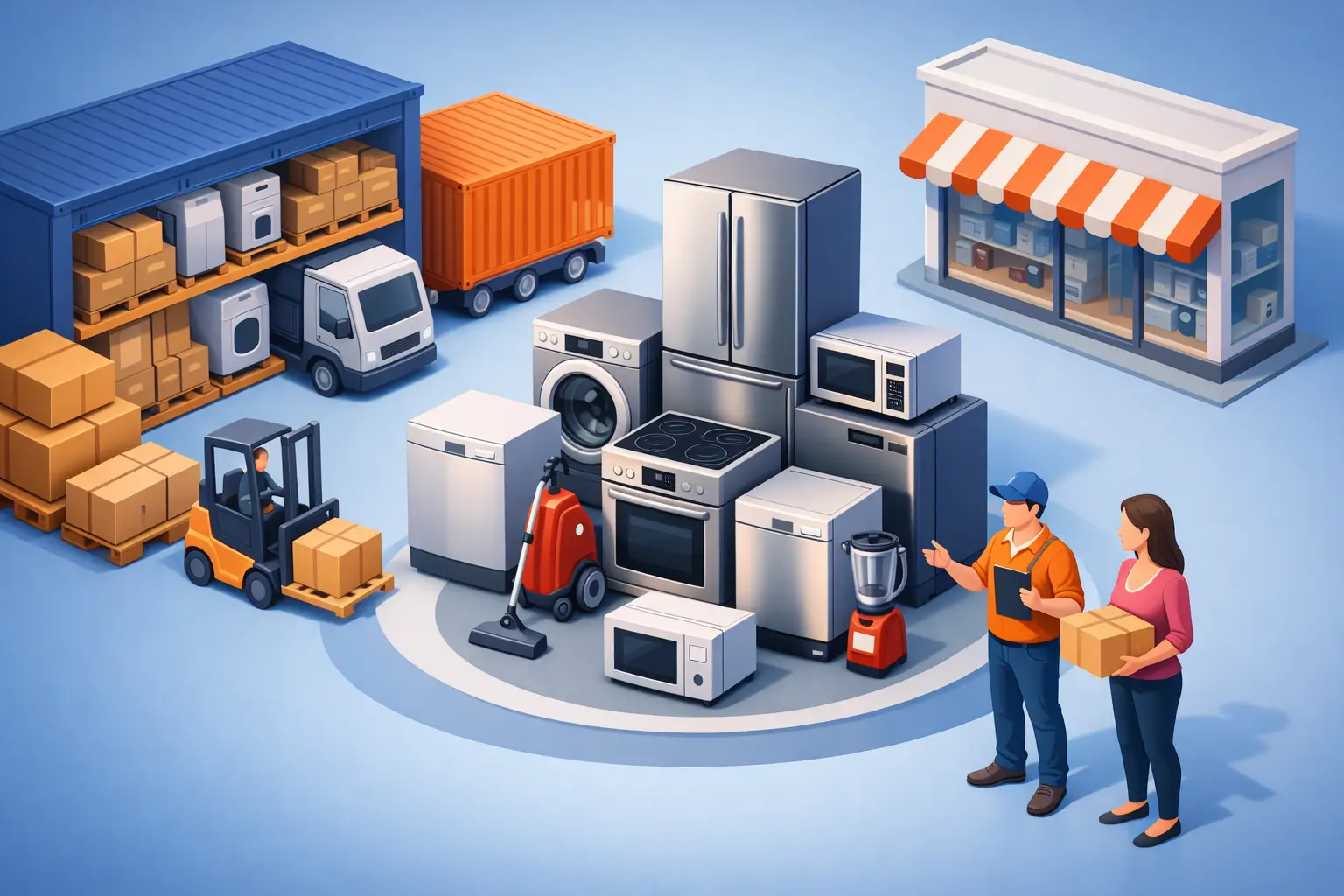
Small retailers do not lose sales because customers stop needing kitchen appliances. They lose sales because the wrong products sit on shelves too long, margins get squeezed, and after-sales problems eat into time and cash. That is why wholesale appliances for small retailers is not just a sourcing decision. It is a buying strategy that affects turnover, customer trust, and repeat business.
For neighborhood stores, online resellers, and small appliance dealers, the best wholesale mix usually is not the biggest catalog. It is the right catalog. In practical terms, that means focusing on appliances customers already understand, already want, and can justify buying without a long decision cycle. In most markets, that starts with useful daily products like air fryers, food processors, mixers, choppers, and water dispensers.
What small retailers really need from wholesale appliances
A small retailer works under different pressure than a large chain. Cash flow matters more. Storage space is tighter. Slow-moving inventory is more expensive. Customer complaints are harder to absorb because one bad experience can damage local reputation quickly.
That is why wholesale appliances for small retailers should be evaluated on four points before anything else: demand, margin, warranty support, and delivery speed. A product may look attractive in a catalog, but if it takes too long to sell or creates service issues, the low unit price stops mattering.
Demand comes first because practical appliances sell more consistently than novelty items. A compact chopper or air fryer solves an everyday problem. A niche appliance with unclear value often needs staff explanation, heavy discounting, or both. For a smaller retailer, simple products with clear benefits usually move faster.
Margin matters, but not as a stand-alone number. A product with a slightly lower markup can still be the better buy if it sells quickly and comes back less often with defects. The real question is not only how much you make per unit. It is how efficiently that product turns into revenue without creating extra cost.
Warranty support is where many small retailers feel the difference between a good supplier and a risky one. If the customer believes the product has local support and official warranty coverage, the sale becomes easier. If the retailer has to handle every complaint alone, the low wholesale price can become expensive very fast.
Fast delivery also matters more than many buyers expect. Small retailers often reorder in smaller quantities, which means lead time affects sales directly. If a top-selling item goes out of stock for too long, customers switch brands or stores.
The best categories to stock first
If you are building or expanding an appliance section, start with products tied to daily kitchen use. These categories tend to sell because shoppers do not need much education to understand the value.
Air fryers
Air fryers remain one of the strongest categories because they match current buying habits. Customers want faster cooking, less oil, easy cleaning, and compact countertop use. From a retail perspective, they also offer visible value. Capacity, power, basket size, and preset functions are easy selling points.
The trade-off is competition. Because air fryers are popular, many sellers carry them. To stay profitable, small retailers need models with a clear feature difference, reliable build quality, and warranty-backed support rather than chasing the very cheapest unit in the market.
Food processors and choppers
These products perform well because they solve repetitive prep tasks. Chopping vegetables, mixing ingredients, and saving kitchen time are easy benefits to communicate. They also fit a wide range of budgets, which helps retailers serve both entry-level and mid-range buyers.
For small stores, choppers often move faster than larger food processors because they are simpler, lower priced, and easier to demonstrate. Food processors can still be excellent sellers, especially when customers are looking for more functions in one appliance.
Mixers
Mixers appeal to households that bake regularly or want easier meal preparation. The key here is choosing practical specifications. Motor strength, bowl capacity, speed settings, and ease of cleaning matter more than decorative features. Customers buying in this category usually compare build quality closely, so poor reliability hurts faster.
Water dispensers
Water dispensers serve both home and office demand, which gives retailers a broader customer base. They are especially useful for stores selling to families, apartment residents, and workplace buyers. When sourced well, they can add stable demand with less trend risk than fast-cycle kitchen gadgets.
How to choose wholesale appliances for small retailers
A good product line should match the way your customers actually shop, not the way a supplier wants to sell. That sounds obvious, but many small retailers still buy too wide, too fast, or too cheap.
Start by looking at price bands, not just products. Most small retailers do best when they carry a clear entry option, a strong mid-range option, and a limited premium option. This gives customers a quick decision path without overcrowding the shelf. Too many similar models create confusion and slower conversion.
Then check feature relevance. Extra functions only help if buyers recognize them as useful. A 12-function processor may look impressive, but a simple, durable unit with the core functions customers use every week may sell more consistently. The same rule applies across categories.
Packaging and presentation matter more than some trade buyers admit. Small retailers often rely on shelf appeal and box communication. Clear wattage, capacity, safety features, and warranty information support faster buying decisions. If the product needs too much explanation, it may not be right for your store mix.
It also helps to choose appliances that fit modern households. Compact design, easy cleaning, practical capacity, and straightforward controls are strong selling points. Customers are often furnishing apartments, upgrading kitchens, or replacing a broken unit quickly. They want convenience and dependable performance more than complicated technology.
What makes a wholesale supplier worth keeping
The best supplier relationship is not only about pricing. It is about whether the supplier helps the retailer stay competitive after the first shipment arrives.
A dependable wholesale partner should offer consistent stock availability, realistic lead times, and official warranty coverage. Product quality should be stable from batch to batch. If one shipment performs well and the next creates returns, the retailer carries the risk in customer trust.
For small retailers, direct wholesale pricing only matters when paired with support. That includes product information that is easy to sell from, quick replenishment, and a clear process for after-sales issues. If service becomes unclear, the retailer spends more time fixing problems than making sales.
This is one reason many buyers prefer working with suppliers that understand both retail and bulk demand. A business such as LIGHT PERFECT TRADING L.L.C, with a product range built around practical home appliances and wholesale-friendly pricing, reflects the kind of model small retailers often need: products customers already want, fast delivery, and official warranty support.
Common buying mistakes that reduce margin
The biggest mistake is buying on unit price alone. A lower-priced appliance can look profitable on paper but become harder to sell if quality feels weak or customer confidence is low. Small retailers usually benefit more from reliable, affordable products than from the absolute cheapest option available.
The second mistake is overstocking slow categories. It is tempting to buy deeper for a better rate, but inventory only helps when it moves. For most small retailers, repeatable demand beats speculative buying.
The third mistake is ignoring after-sales friction. If a supplier cannot support warranty issues clearly, every complaint lands on the retailer. That affects staff time, customer loyalty, and future referrals.
Another common issue is carrying too many nearly identical models. This can reduce purchasing power and confuse customers. A tighter assortment with clearer differences usually sells better and is easier to manage.
Building a smarter product mix
A strong appliance assortment should feel practical from the customer side and efficient from the retailer side. That usually means balancing high-demand staples with a few higher-ticket products that lift average order value.
For example, a retailer might build around everyday sellers such as choppers, compact air fryers, and basic mixers, then support those with selected food processors or water dispensers for customers trading up. This creates a catalog that serves different needs without becoming scattered.
It also helps to plan around replacement cycles. Some products are bought because the customer wants an upgrade. Others are bought because an old appliance failed and they need a fast replacement. In the second case, availability, price clarity, and warranty reassurance often close the sale faster than premium branding alone.
Why the right wholesale choice keeps paying off
Wholesale appliances for small retailers should create more than stock. They should create easier sales, fewer returns, and better repeat business. The right products help customers solve everyday problems. The right supplier helps the retailer protect margin while staying ready to restock.
That is the real advantage in this category. Small retailers do not need the largest range in the market. They need appliances that are practical, competitively priced, easy to sell, and backed by support customers can trust. If your buying decisions stay close to those basics, growth becomes much more manageable – and much more profitable.
A helpful way to think about your next order is simple: choose products your customers will use often, notice quickly, and feel confident buying again.