
Blog
Food Chopper Buying Guide for Smart Kitchens

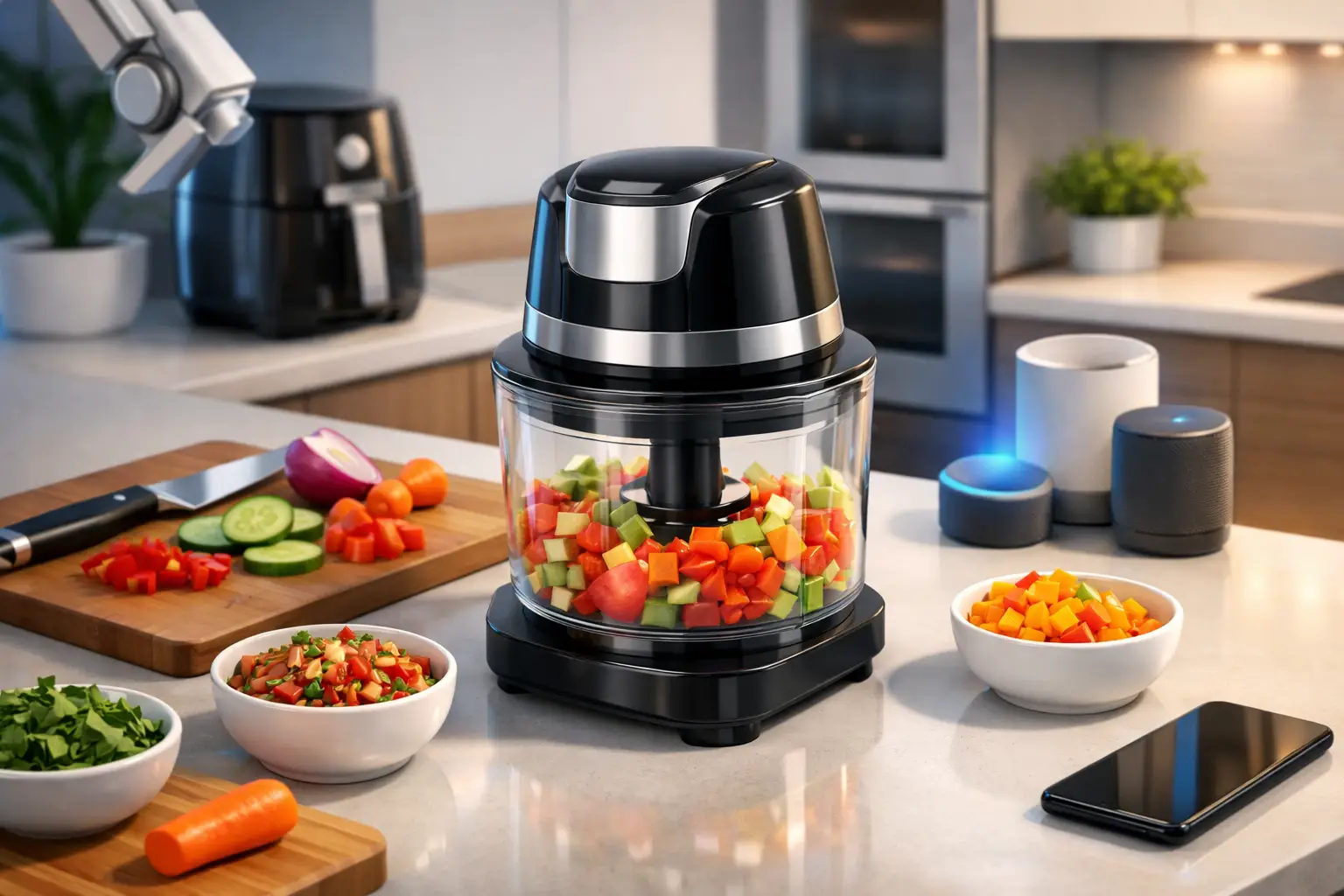
A food chopper usually looks simple until you bring home the wrong one. Then every quick salad, onion prep, salsa batch, or garlic chop becomes a reminder that size, blade quality, and motor strength matter more than most shoppers expect. This food chopper buying guide is built to help you choose based on real kitchen use, not just packaging claims.
Why a food chopper earns its space
For many homes, a food chopper is not a luxury appliance. It is a time-saving tool that handles the repetitive prep work people want done fast. If you cook often, pack lunches, prepare sauces, or make family meals on a schedule, a good chopper can cut down prep time without taking over the countertop.
It also fills an important gap between a knife and a full food processor. A food processor is useful for larger batches and more functions, but it can be bulky, slower to clean, and more than some buyers need for everyday chopping. A compact chopper makes more sense when speed, convenience, and storage matter.
That said, not every buyer needs the same machine. A single apartment user, a family kitchen, and a small reseller buying for inventory will all judge value a little differently.
Food chopper buying guide: start with capacity
Capacity is one of the first things to check because it affects convenience every day. Small bowl choppers are fine for garlic, herbs, nuts, and a quick onion. They suit compact kitchens and buyers who cook in smaller portions. If you mostly prep for one or two people, oversized capacity can feel wasteful.
Medium capacity works better for families and regular meal prep. It gives you enough room for onions, tomatoes, chilies, vegetables, dips, and small sauce batches without forcing multiple runs. For many households, this is the best balance of size and practicality.
Larger capacity models make sense when you cook in bulk, prep for gatherings, or need a machine that can support heavier daily use. The trade-off is storage space. A bigger bowl is useful only if you will actually use that volume often.
Motor power matters more than marketing
Motor wattage is one of the clearest signs of how confidently a food chopper will handle tougher ingredients. Lower-power models can still perform well for soft vegetables, herbs, and light jobs, but they may struggle with dense onions, carrots, nuts, or repeated daily use.
A stronger motor usually means faster chopping, more consistent results, and less strain during heavier prep. It can also make the appliance feel more dependable over time. For households that cook several times a day or buyers sourcing stock for demanding customers, it is worth paying attention to power rather than choosing only by price.
Still, more wattage is not automatically better for everyone. If your needs are basic, a lighter-duty chopper may be more affordable and perfectly suitable. The key is matching motor strength to actual use, not buying for a kitchen fantasy.
Blade design is where performance shows up
When shoppers compare choppers, they often focus on the outside first. In practice, blade quality is what determines whether the appliance feels sharp, fast, and efficient after repeated use. Stainless steel blades are a strong choice because they resist wear and handle moisture better.
The number and arrangement of blades also affect the result. Some choppers are designed for quick rough chopping, while others produce a more even texture. If you want clean results for onions, herbs, and vegetables, look for a blade system built for uniform cutting rather than just speed.
Removable blades are also practical. They make washing easier and help with maintenance. A machine that chops well but is difficult to clean tends to get used less over time.
Manual or electric depends on your kitchen habits
Manual choppers appeal to buyers who want simplicity, portability, and a lower price point. They can be useful for small jobs and do not require electricity, which makes them convenient in compact spaces or for occasional use. They are also easy to store.
Electric choppers are better for speed, consistency, and frequent prep. If you cook regularly, handle larger volumes, or want less physical effort, electric is the stronger long-term option. It gives you more convenience during busy meal prep and typically handles tougher ingredients with less trouble.
For most households looking for daily value, an electric model offers better return on use. For occasional prep or budget-focused buyers, manual may still be enough. Neither is universally better. It depends on how often the appliance will come out of the cabinet.
Ease of cleaning should not be an afterthought
A food chopper can save time, but only if cleanup stays manageable. This is where many low-cost models disappoint. Complex lids, awkward bowl shapes, and fixed blade parts turn a quick job into extra work.
Look for a bowl and blade assembly that can be separated easily. Smooth interior surfaces are easier to rinse, and fewer hard-to-reach corners mean less food buildup. Buyers with busy kitchens should prioritize appliances that are genuinely easy to clean, not just described that way.
This matters even more in homes where the chopper will be used daily. Convenience is not only about chopping speed. It is also about whether the appliance is simple enough to clean and store right after use.
Safety and build quality are worth paying for
A food chopper works with sharp blades and fast-moving parts, so safety features should be part of the buying decision. A secure locking system, stable base, and dependable lid fit all make a difference. These details help the appliance operate more confidently and reduce the risk of spills or misuse.
Build quality also affects durability. A solid bowl, well-fitted lid, and reliable motor housing usually indicate a product designed for longer service life. Cheap construction often shows up early through cracks, loose fittings, or inconsistent performance.
For buyers who care about value, durability matters just as much as initial price. A lower-cost appliance is only a bargain if it keeps working well.
What features are actually useful
Not every extra feature adds real value. Pulse control is genuinely useful because it gives you better control over texture. That means you can avoid over-processing softer ingredients. Non-slip feet are another practical feature because they help keep the chopper stable on the counter.
Transparent bowls or lids are also helpful. Being able to see the chop level while the machine runs can save time and reduce guesswork. Cord storage, compact design, and easy-grip controls may seem minor, but they improve everyday use.
By contrast, too many attachments can be unnecessary if your goal is quick chopping. If you need slicing, shredding, kneading, and heavy processing, you may actually need a food processor instead.
A food chopper buying guide for different buyers
If you are shopping for a home kitchen, focus first on bowl size, motor power, and cleaning ease. Those three factors usually determine whether the appliance becomes a regular part of meal prep or sits unused.
If you are buying for an office pantry or shared accommodation, compact size and simple operation matter more. A model that is easy for anyone to use safely is the better choice.
If you are a reseller or bulk buyer, consistency matters most. Look for products with practical specifications, broad customer appeal, and official warranty support. Reliable after-sales confidence can be as important as the feature list itself, especially in markets where customers want local fulfillment and dependable ownership.
That is why many buyers in the UAE look for a supplier that combines practical product selection with fast delivery, direct wholesale pricing, and warranty-backed purchases. LIGHT PERFECT TRADING L.L.C serves that need by focusing on performance-driven kitchen appliances that fit both retail and trade demand.
Common mistakes shoppers make
The biggest mistake is buying only by price. That often leads to weak motors, poor blade quality, or frustrating cleanup. Another common mistake is choosing the wrong capacity. Too small, and you repeat batches constantly. Too large, and the appliance becomes inconvenient to store and clean.
Some buyers also expect a food chopper to replace a full food processor. It can handle many everyday tasks, but it has limits. Knowing those limits helps you buy the right tool the first time.
A good choice feels simple once it is in your kitchen. If the model matches your prep volume, ingredient type, storage space, and cleaning expectations, you will use it often and feel the value quickly. Buy for the way you actually cook, and the right food chopper will prove itself in every fast, everyday meal.