
Blog
Tabletop Versus Freestanding Dispenser

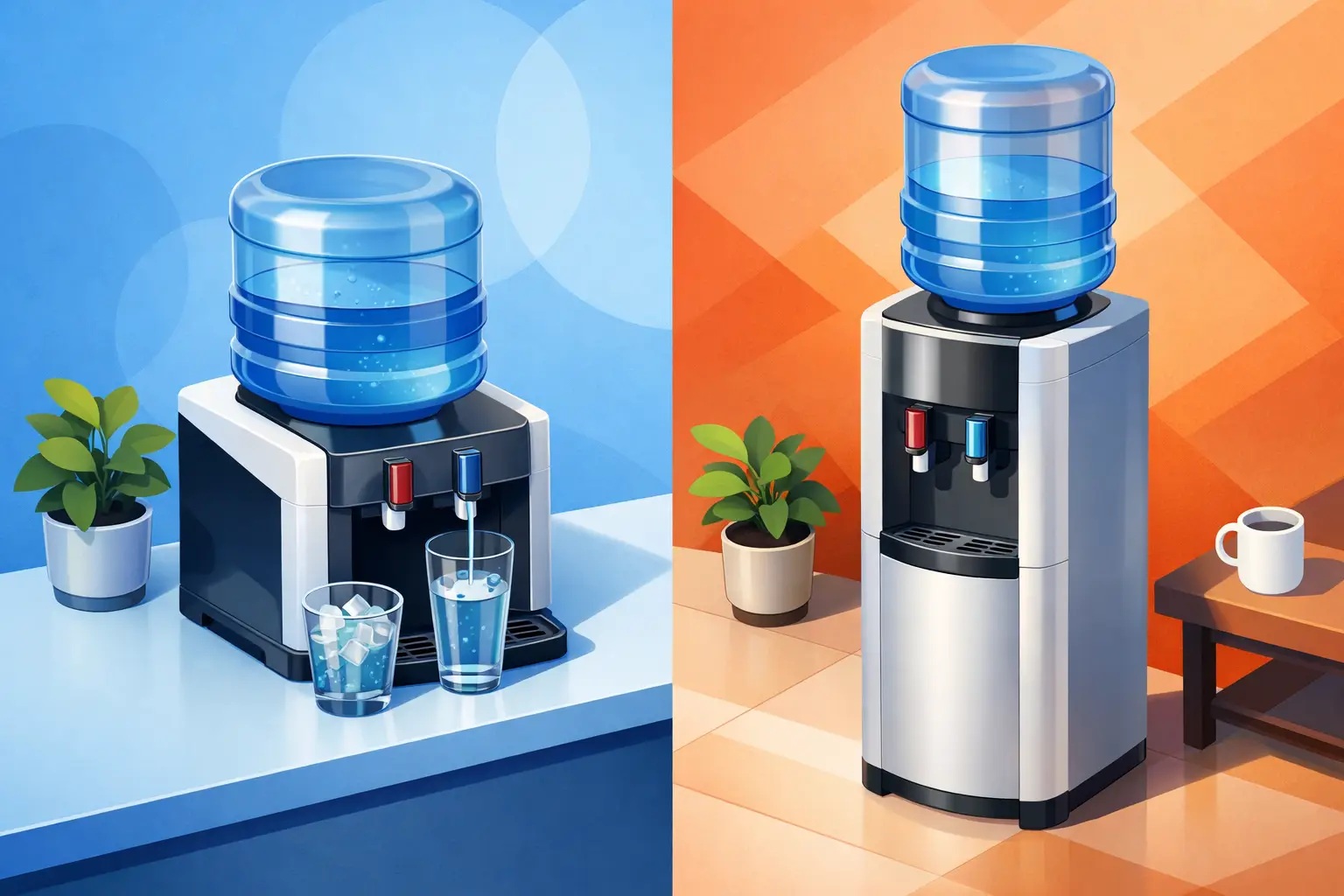
A water dispenser usually gets chosen after everything else in the room is already decided. The cabinet is fixed, the corner is occupied, and the question becomes simple: should you buy a tabletop versus freestanding dispenser? The right answer depends less on appearance and more on space, capacity, daily demand, and how often you want to refill, clean, or move the unit.
For most buyers, this is a practical purchase. You want cold and hot water on demand, a design that fits the room, and a model that works reliably without taking over the space. That is why the comparison matters. A dispenser that looks good in a product photo can still be the wrong fit if your kitchen is compact, your office has heavy daily use, or your users include children.
Tabletop versus freestanding dispenser: what changes in real use?
The main difference is not just size. A tabletop dispenser sits on a counter, platform, or dedicated stand. A freestanding dispenser is a full-height unit that stands directly on the floor. That changes how each model performs in daily use, how much room it needs, and who it suits best.
A tabletop unit is usually the better match for apartments, smaller kitchens, pantry shelves, reception desks, and rooms where floor space is limited. It can deliver the same hot and cold function many buyers want, but in a more compact footprint. If your priority is fitting a dispenser into an already busy space, tabletop models often make more sense.
A freestanding dispenser is usually stronger on convenience for larger households and offices. It is easier to access because users do not need a raised surface, and it often feels more natural in shared spaces where people refill bottles throughout the day. It also gives you more flexibility if you want a larger bottle setup or extra storage in some designs.
Space is usually the first deciding factor
If you live in an apartment or have limited kitchen area, floor space is expensive. A freestanding unit may seem manageable until it competes with a trash bin, small dining set, or walkway clearance. In those cases, a tabletop dispenser can solve the problem neatly, especially if you already have a solid counter or side platform available.
That said, countertop space is valuable too. Many households already use that area for a microwave, air fryer, mixer, or food processor. If every inch of the kitchen top is working hard, adding a tabletop dispenser may create clutter instead of convenience. A freestanding model can actually keep the room more organized by moving the water station off the counter.
This is where the buying decision becomes situational. Small room does not always mean tabletop. If your counter is full but you have one clean floor corner, freestanding may still be the smarter option.
Capacity and usage matter more than many buyers expect
A dispenser is not used the same way in every setting. One or two people at home have very different water needs compared with a family kitchen, salon waiting area, clinic, or office pantry. The more people using the machine, the more important convenience and access become.
Tabletop dispensers work well for light to moderate daily use. They are often enough for couples, small families, and personal office rooms where demand stays predictable. They also suit buyers who value compact design over maximum output.
Freestanding dispensers usually feel better suited to medium to heavy use. The unit is easier for repeated filling throughout the day, and users can approach it without needing to clear space on a counter. In offices and shared commercial spaces, that difference becomes noticeable very quickly.
If the dispenser will be placed somewhere public or shared by staff, customers, or guests, freestanding models tend to be the more practical commercial choice. They present better, handle traffic more comfortably, and usually fit user expectations in office-style environments.
Tabletop versus freestanding dispenser cost differences
Price is often part of the decision, but the lower upfront cost is not always the better value. Tabletop dispensers are commonly more budget-friendly, which makes them attractive for first-time buyers, small homes, and value-focused purchases. If your needs are simple, there is no reason to pay for a larger floor unit you do not need.
Freestanding dispensers may cost more depending on design, features, and build, but they can offer better long-term convenience in the right setting. For higher daily use, that extra spend often feels justified because the product is easier to place, easier to access, and more suitable for multi-user environments.
For wholesale buyers and resellers, the decision also depends on customer profile. Tabletop models can move well in apartment-heavy markets and among price-conscious home users. Freestanding models often appeal to offices, larger homes, and buyers who want a more complete water station setup.
Installation and placement are not equally simple
Neither type is usually complex, but placement conditions matter. A tabletop dispenser needs a stable, level, weight-bearing surface. That sounds simple until you consider bottle load, daily movement, and nearby appliances. Not every kitchen shelf or side table is ideal.
Freestanding models remove that issue because they are designed to stand independently. You only need proper floor space, power access, and enough room for bottle loading and cleaning. In practical terms, this often makes setup easier in offices and larger utility areas.
Bottle handling also matters. Some users find lifting and placing water bottles on a raised tabletop dispenser less comfortable than loading a floor-standing unit. This is especially relevant for older users, staff in busy workplaces, or any setting where bottle changes happen often.
Cleaning, maintenance, and daily ownership
Water dispensers should be easy to maintain, not just easy to buy. A tabletop unit may be easier to wipe externally because of its smaller body, but that depends on how tightly it is placed between other items. If it sits in a crowded counter corner, cleaning around it can become awkward.
A freestanding dispenser is usually easier to keep as a dedicated water point. You can clean around it without moving kitchen tools, and the unit has a more defined place in the room. On the other hand, larger body size means slightly more exterior surface to manage.
For both types, buyers should pay attention to build quality, tap design, drip tray access, and overall ease of cleaning. Official warranty support also matters because a dispenser is a daily-use appliance, not a seasonal product. Reliable after-sales coverage reduces the risk of saving money upfront and paying for it later.
Design, safety, and who will use it
Looks matter, but only after function. Tabletop dispensers often suit modern compact interiors because they appear lighter and less intrusive. Freestanding units usually create a more established appliance look, which can work well in offices, waiting areas, and larger kitchens.
Safety is another practical point. If children will use the dispenser, hot water protection matters regardless of format. The placement height also changes user experience. A tabletop unit may be safer from unsupervised access if positioned carefully, but that depends entirely on where it is placed. A freestanding model is easier for all users to reach, which can be a benefit or a concern depending on the environment.
Which option fits your space best?
If your main concern is saving floor space, keeping costs controlled, and adding basic hot and cold water access to a smaller home, a tabletop dispenser is often the smarter buy. It does the job without demanding a dedicated floor footprint, and it works especially well where daily usage is moderate.
If your priority is easier access, better suitability for group use, and a more natural fit for offices or larger households, a freestanding dispenser usually delivers better day-to-day convenience. It may take more room, but in return it often feels more practical over time.
For UAE buyers, the best choice usually comes down to layout and usage pattern rather than trend. Fast delivery, official warranty, and clear product specifications make the decision easier because you can compare what actually matters: dimensions, cooling and heating function, bottle compatibility, and overall value. That is the kind of decision practical retailers like LIGHT PERFECT TRADING L.L.C build around.
The right dispenser should fit your room and your routine without compromise. If you picture where it will stand, who will use it, and how often it will run, the better option becomes clear very quickly.