
Blog
Retail vs Wholesale Appliances Explained

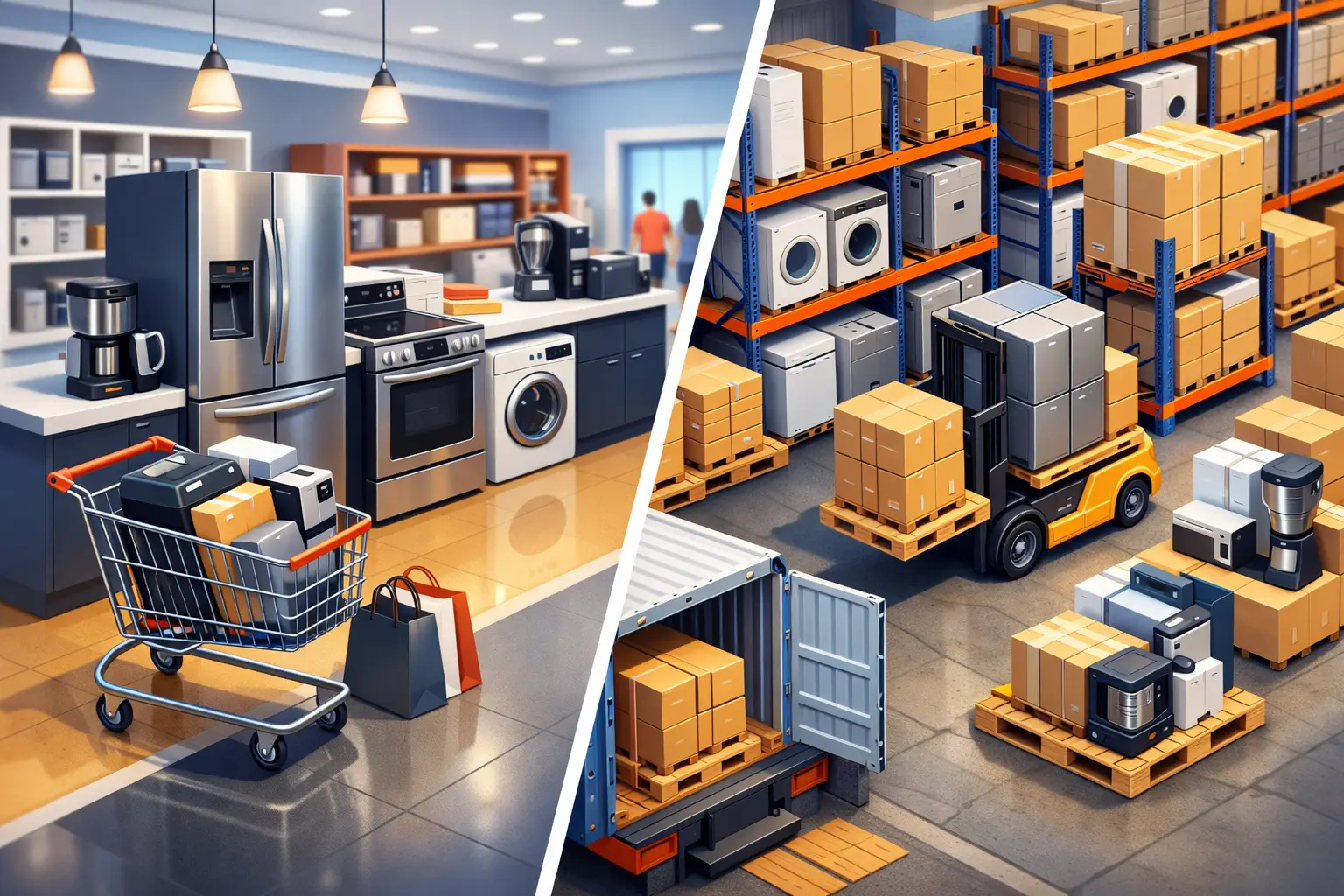
A family buying one air fryer and a reseller sourcing 50 mixers are shopping for appliances, but they are not buying the same way. That is where retail vs wholesale appliances becomes more than a pricing question. It affects unit cost, warranty expectations, order size, delivery planning, and the kind of value you get from every purchase.
For households, the right choice usually comes down to convenience, product fit, and dependable after-sales support. For offices, landlords, small retailers, and bulk buyers, the decision is often about margins, stock availability, and repeat purchasing. If you understand the difference clearly, you can avoid overpaying, buying the wrong quantity, or choosing a supplier that does not match your needs.
What retail vs wholesale appliances really means
Retail appliance buying is designed for end users. You choose a product for your own home, apartment, pantry, office kitchen, or personal use. You usually buy in small quantities, often one unit at a time, and the purchase experience is built around convenience. Product pages, delivery speed, warranty coverage, and easy model comparison matter most here.
Wholesale appliance buying is built for volume. Instead of selecting one food processor for your kitchen, you may be sourcing multiple units for resale, staff accommodation, furnished apartments, projects, or commercial distribution. The pricing structure changes because quantities are higher, and buyers are usually more focused on per-unit cost, stock consistency, and supply reliability.
That sounds simple, but the real difference is not just quantity. It is the full buying model. Retail prioritizes immediate use. Wholesale prioritizes scale.
Price is the obvious difference, but not the only one
Most buyers start with price, and that makes sense. Retail pricing includes the cost of selling individual units, handling single orders, and supporting one-off buyers. Wholesale pricing is generally lower per unit because the supplier can move more inventory in fewer transactions.
Still, the cheapest number on the page is not always the best value. A low price without official warranty, poor packaging, or delayed delivery can create more cost later. That matters whether you are a homeowner replacing a chopper or a reseller trying to keep customers happy.
In retail, paying slightly more can make sense if you get faster delivery, local support, and a product that is ready for daily use. In wholesale, even a small price difference per unit can have a major effect across a large order, so buyers tend to negotiate based on quantity, repeat orders, and availability.
When retail appliances make more sense
If you are buying for personal use, retail is usually the better fit. You can choose the exact appliance you need, compare features quickly, and order without committing to bulk quantities. For a home kitchen, that flexibility matters more than pallet-level pricing.
This is especially true for products like air fryers, mixers, food processors, choppers, and water dispensers. Most households are trying to solve a practical need. They want faster meal prep, easier cleaning, more countertop efficiency, or a better setup for family use. They are not trying to build stock.
Retail also works well when your priority is model selection. A customer may care about bowl capacity, power rating, blade quality, safety lock features, or how well an appliance matches a modern kitchen. Those details often matter more than getting a lower unit price tied to bulk buying.
Another advantage is lower risk. You buy one or two units, test real-life performance, and see if the product fits your routine. That is a smart move if you are trying a new category for the first time or upgrading from a basic appliance.
When wholesale appliances are the better buy
Wholesale is the stronger option when quantity is part of the plan from the start. If you are a reseller, project buyer, office manager, furnished property operator, or institutional purchaser, buying unit by unit is usually inefficient.
The big advantage is cost control. With wholesale appliances, the per-unit price can be significantly lower, which helps protect your margin or reduce your total project spend. For businesses, that difference adds up quickly.
Consistency is another major benefit. If you need the same mixer model across several apartments or want matching water dispensers for office locations, wholesale supply helps keep specifications consistent. That makes replacement, support, and restocking easier later.
Wholesale can also improve planning. Instead of scrambling to source appliances from different sellers, you can work with one supplier that offers stable stock, direct pricing, and delivery support. For many buyers, that reliability is just as important as the discount.
Retail vs wholesale appliances on warranty and support
One common mistake is assuming warranty support works the same way in every buying channel. It does not always. In retail, warranty terms are often presented clearly because the customer is buying for direct use and expects immediate support if something goes wrong.
In wholesale, support may depend on order type, brand terms, or whether the purchase is for resale. That is why serious bulk buyers should always confirm the warranty structure before placing a large order. Official warranty coverage matters because it protects both your investment and your reputation if you plan to resell the products.
For appliances, this is not a small issue. Products such as air fryers, food processors, and water dispensers are used regularly, and buyers want confidence that they are not stuck with unsupported stock. A supplier offering official warranty and clear after-sales terms has a real advantage.
Delivery speed and stock availability matter more than buyers expect
A good price loses its appeal if the product is out of stock or arrives late. In retail, delivery speed often shapes the whole buying decision. Many customers are replacing a broken unit or finishing a new home setup, so delays are frustrating.
In wholesale, timing can be even more sensitive. A reseller may need inventory before a sales period. A property buyer may need appliance delivery aligned with handover schedules. An office may be setting up multiple pantry areas at once. In those cases, stock availability is not just a convenience factor. It affects operations.
This is why many UAE buyers prefer suppliers that combine retail access with wholesale dealing. You get the convenience of a modern storefront with the practical advantages of bulk sourcing, local fulfillment, and faster delivery planning.
How to choose the right model for your buying needs
The best buying route depends on what you need the appliances to do, how many units you need, and how much support you expect after purchase. If you are buying a single appliance for daily household use, retail is the straightforward choice. You can focus on performance, size, features, and budget without overcomplicating the process.
If you are buying repeatedly or in larger quantities, wholesale becomes the better commercial decision. The more predictable your product needs are, the more wholesale pricing and supply structure can work in your favor.
There is also a middle ground. Some buyers start at retail, especially when testing product quality, then move into wholesale once they are confident in the supplier and product line. That approach makes sense for small resellers or offices gradually standardizing their appliance needs.
A hybrid supplier can be especially useful here. Businesses like LIGHT PERFECT TRADING L.L.C serve both end users and bulk buyers, which makes the transition easier for customers who want retail convenience today and wholesale value as their needs grow.
What smart buyers should compare before ordering
Before choosing between retail and wholesale, look beyond the headline price. Compare the full buying value. Check whether the appliance has the right wattage, capacity, and safety features for the job. Confirm if the finish, build quality, and ease of cleaning match your expected use.
Then look at commercial details. Ask about quantity breaks, stock continuity, delivery timelines, and official warranty coverage. If you are a reseller, consistency across batches matters. If you are a homeowner, simple ordering and fast delivery may matter more.
That is the real answer to retail vs wholesale appliances. One is not better in every case. The better option is the one that matches how you buy, how often you buy, and what kind of support you need after the box arrives.
If you are choosing appliances for a home, office, or resale business, buy with the end use in mind first. The right supplier should make price, performance, and peace of mind work together.