
Blog
Best Food Processor for Daily Meals

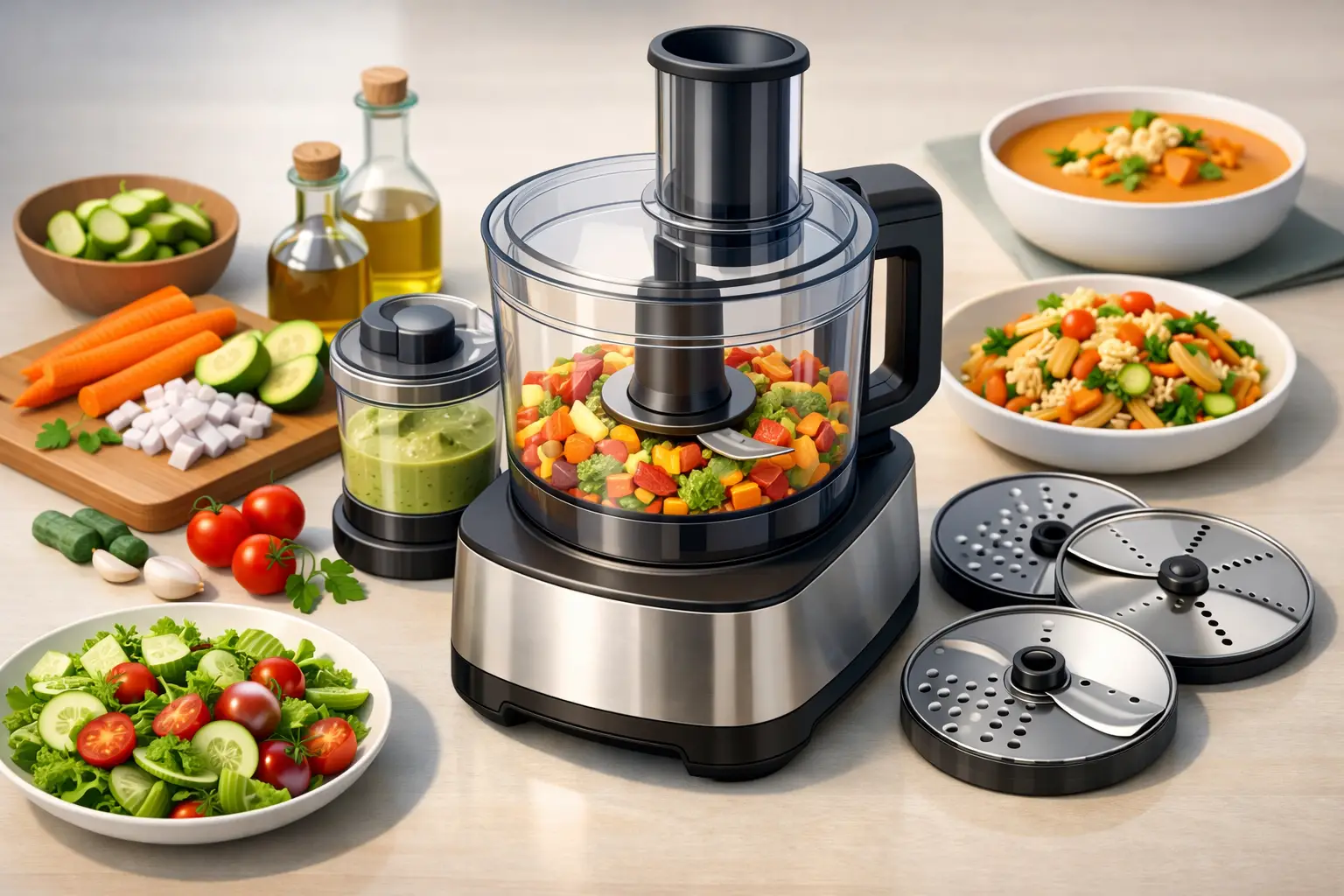
A food processor earns its place in the kitchen when it saves time on the meals you actually make every week. Not once a month. Not only for special recipes. For chopping onions before dinner, slicing cucumbers for salad, shredding carrots, mixing dough, or turning tomatoes, herbs, and garlic into a quick sauce, the right machine should make daily cooking faster without making cleanup feel like extra work.
That is why choosing a food processor for everyday cooking is less about buying the biggest model or the one with the most attachments, and more about buying the one you will use often. For most households, apartment kitchens, offices with pantry setups, and even small resellers looking for practical stock, the best choice comes down to four things: capacity, motor strength, ease of cleaning, and real value backed by warranty.
What a food processor for everyday cooking should do well
If you cook most days, your processor needs to handle basic prep quickly and consistently. Chopping vegetables evenly matters. Slicing should be fast enough to replace hand prep for potatoes, onions, zucchini, and more. A good unit should also help with repetitive tasks like shredding cheese, mincing herbs, blending dips, or preparing ingredients in batches.
Power matters, but only to a point. A stronger motor usually handles harder ingredients better and puts less strain on the machine during regular use. Still, a very high-wattage model is not automatically the best option for every kitchen. If you mostly prepare salads, sauces, chopped vegetables, and light mixtures, a mid-range unit can be the smarter buy. If your routine includes dough, tougher root vegetables, nuts, or larger batch prep for family meals, then higher power starts to make more sense.
Capacity is another area where buyers often overestimate what they need. A large bowl is useful for family kitchens and batch cooking, but it also takes up more storage space and can feel inconvenient for small jobs. A compact or medium-capacity processor usually suits singles, couples, and apartment residents better because it is faster to take out, use, and wash.
Size matters more than most buyers expect
The right size depends on how many people you cook for and how often you prep ingredients in one go.
A compact model works well for small kitchens and quick daily tasks. It is ideal for chopping onions, garlic, chilies, herbs, and small vegetable portions. It is also easier to store in cabinets where counter space is limited.
A medium-capacity model is often the best all-around option. It can handle family dinner prep without feeling oversized for smaller tasks. For many homes, this is the sweet spot because it gives enough volume for practical daily use while staying manageable for cleaning and storage.
A larger model is best for big families, bulk cooking, meal prep sessions, or trade buyers who know their customers want more capacity. It gives flexibility, but there is a trade-off. Large bowls can be less convenient for very small ingredient amounts, and the machine itself may require more permanent counter space.
Which features are worth paying for
Not every extra feature improves everyday cooking. The useful ones are the features that reduce prep time and increase flexibility.
A stainless steel chopping blade is essential. It should be strong enough for vegetables, nuts, herbs, and common kitchen prep without losing sharpness quickly. Slicing and shredding discs are also genuinely useful because they save time on salads, potatoes, cheese, and carrots. If you make dough at home, a dough tool can add value, but it depends on whether baking is part of your weekly routine.
Pulse control is one of the most practical features because it gives better control over texture. That matters when you want chopped onions instead of onion paste, or a coarse salsa instead of a smooth blend. Multiple speed settings are also useful, especially in households that prep a mix of soft and hard ingredients.
Safety lock systems matter more than they get credit for. A processor should not run unless the bowl and lid are properly in place. For family homes, this is not just a technical feature. It is part of dependable daily ownership.
Ease of cleaning decides how often you use it
A processor can perform well and still become a bad purchase if it is frustrating to clean. This is one of the biggest reasons some appliances end up stored away after a few weeks.
For everyday use, removable parts should be easy to rinse and reassemble. Smooth bowl surfaces are better than designs with hard-to-reach corners. Attachments should feel simple, not confusing. If a machine takes too long to clean after slicing two vegetables and chopping a few onions, many people will go back to using a knife.
This is especially important for busy families, office pantry buyers, and apartment residents who want convenience, not extra kitchen work. In practical terms, a food processor should shorten the full job from prep to cleanup. If it only speeds up the chopping part, it is not doing enough.
A food processor for everyday cooking should match your real routine
The best buying decision starts with honesty about how your kitchen works.
If you cook simple meals most days, look for a processor that handles chopping, slicing, and shredding well. If your meals often include homemade sauces, dips, burger mixtures, or dough, then choose a model with enough motor strength and the right attachments to cover those tasks.
If your kitchen is small, prioritize footprint and storage. If you shop for a family home, focus on bowl size and motor reliability. If you buy for resale or wholesale supply, practical features and price-to-performance value matter even more because customers want clear benefits they can understand quickly.
There is no single perfect model for everyone. That is the key trade-off. More power usually means a higher price. More capacity usually means more space used. More accessories can mean better versatility, but also more parts to store and wash. The right product is the one that fits your daily pattern without adding complexity.
What buyers should check before purchasing
Before choosing any model, it helps to look beyond appearance. A modern finish is good, but daily performance matters more.
Check the wattage and ask whether it fits the jobs you actually do. Look at bowl capacity in practical terms, not just numbers. Think about whether you usually cook for one or two people, a full family, or in larger batches. Review the included blades and discs and decide whether you will use them regularly.
Also pay attention to build quality, bowl locking, non-slip feet, and simple controls. These details affect everyday comfort. A machine that feels stable on the counter and easy to operate will get more use than one that seems powerful on paper but awkward in practice.
Warranty support should not be treated as a bonus. It is part of the value. For home appliances, official warranty coverage gives buyers more confidence, especially in markets where quality can vary widely across sellers. Fast local delivery also matters because convenience starts before the product even reaches the kitchen.
Value is not the same as the lowest price
A low price can be attractive, but if the motor struggles, the bowl cracks easily, or replacement support is unclear, the savings disappear quickly. Better value comes from balanced performance, practical features, and dependable support after purchase.
For that reason, many buyers prefer retailers that offer official warranty and direct pricing instead of inflated store markups. For households, that means a better ownership experience. For trade and wholesale buyers, it means more confidence in what they stock and sell. At Perfect Bazzar, this value-driven approach matters because buyers want appliances that feel reliable from the first use, not just affordable at checkout.
Who should buy one now
If you prep vegetables almost every day, cook for a family, make fresh sauces, or want to cut down kitchen time during busy weekdays, a food processor is not a luxury item. It is a practical upgrade. The same applies to offices with regular pantry use and resellers looking for a fast-moving kitchen category with clear customer demand.
On the other hand, if you rarely cook or only do very light prep, a smaller chopper may be enough. That is the honest trade-off. A full processor gives more flexibility, but it only pays off when you use its capacity and attachments regularly.
The right machine should feel useful on an ordinary Tuesday night. It should help you finish prep faster, keep your kitchen moving, and make daily cooking easier without taking over your counter. Choose the one that fits your routine, your space, and your budget, and you will feel the difference every time dinner starts a little quicker.