
Blog
Air Fryer Cooking Capacity Explained

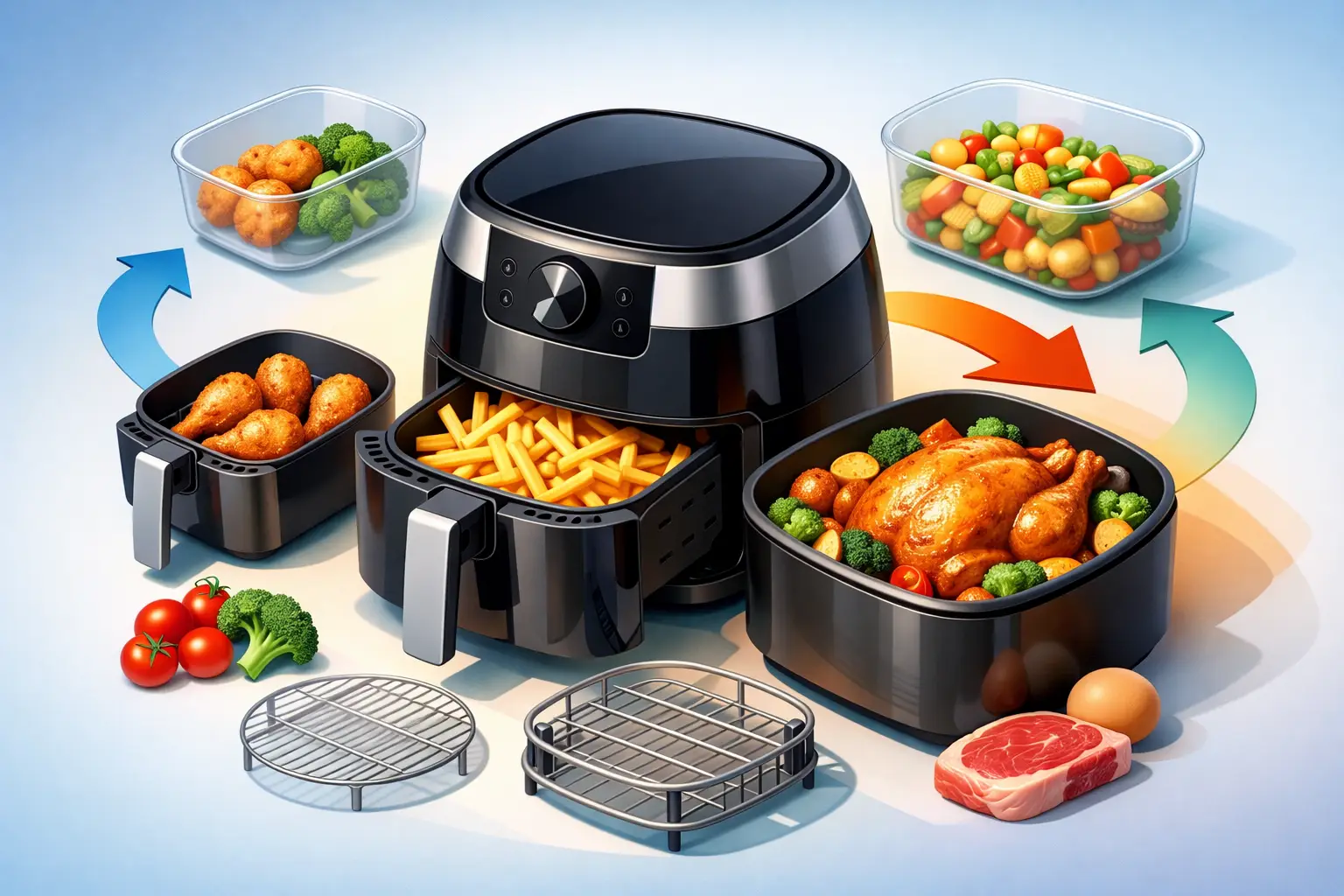
A 6-quart air fryer can look perfect on a product page, then feel too small the first time you try to cook dinner for four. That is why air fryer cooking capacity matters more than many shoppers expect. It is not just a number on the box. It affects how much food fits, how evenly it cooks, how often you need to run extra batches, and whether the appliance actually makes daily cooking easier.
For most buyers, capacity is where value starts. A larger model can save time and handle family meals better, but it also takes more counter space and usually costs more. A smaller unit may be ideal for apartments, office pantries, or quick personal meals, especially if you want efficient performance without paying for unused volume.
What air fryer cooking capacity really means
Air fryer cooking capacity usually refers to the size of the basket or cooking drawer, measured in quarts or liters. On paper, that sounds simple. In real kitchen use, though, usable space is what counts. A basket may hold a certain volume, but air fryers cook best when hot air can circulate around the food. If you pack the basket too tightly, the food can steam instead of crisp.
That means a 4-quart model does not automatically cook four large portions of everything. Fries, nuggets, vegetables, chicken pieces, and pastries all take up space differently. Flat foods may fit well in a wider basket, while bulky items need depth. Capacity numbers are helpful, but shape matters almost as much as size.
This is where smart buying decisions happen. Shoppers often compare only price and listed capacity. A better comparison includes basket dimensions, food type, and how many people you usually cook for on a normal day, not just on weekends or holidays.
Choosing air fryer cooking capacity by household size
The right air fryer cooking capacity depends on your routine. If you live alone or cook mostly snacks, a compact unit often does the job well. If you regularly prepare full meals for a family, going too small becomes frustrating fast.
For one or two people
A small air fryer in the 2 to 4 quart range is often enough for singles, couples, dorm setups, or office use. It works well for fries, reheating leftovers, frozen snacks, small chicken portions, and vegetables. These models are usually easier to store, quicker to preheat, and more budget-friendly.
The trade-off is batch size. If you want to cook protein and sides at the same time, you may need to work in rounds. That is manageable for light use, but less convenient for everyday family dinners.
For three to four people
A 4 to 6 quart air fryer is a practical middle ground for many homes. It gives enough room for regular meal prep without taking over the countertop. This size range is popular because it balances price, performance, and flexibility. You can cook a decent portion of fries, several chicken pieces, vegetables, or small baked items in one run.
For families, this is often the starting point. If you like air frying as part of your weekly routine, not just for snacks, mid-size capacity tends to offer the best everyday value.
For larger families or bulk cooking
A 6 quart and above model makes more sense for bigger households, meal prep, or buyers who want fewer repeat batches. Larger baskets are also useful for cooking whole chickens, bigger cuts, or larger side portions. In many homes, the convenience of fitting more food at once quickly justifies the extra cost.
The trade-off is space. A high-capacity air fryer needs more room for storage and daily use. For smaller kitchens, that matters. If counter space is already limited, the biggest model may not feel like the best value, even if the cooking volume looks attractive.
Basket size versus actual food capacity
This is where many buyers get caught out. Air fryer cooking capacity is not the same as finished meal capacity. You should not fill the basket to the top with every type of food. Airflow is the main reason air fryers work well, so crowding reduces crispness and can leave uneven results.
For example, a basket may technically hold a large quantity of fries, but if they are stacked too heavily, they cook less evenly and need more shaking. The same applies to breaded items, wings, and vegetables. A larger basket often gives better cooking quality because it allows more food to sit in a single layer or closer to it.
Wider baskets are especially useful for foods that benefit from spread-out placement. Deeper baskets can still work well, but they often need more turning and attention. That is why dimensions and layout deserve a close look, not just the headline quart number.
Capacity and cooking performance go together
Bigger is not always better. A larger air fryer can be more practical for families, but only if it maintains heat well and circulates air effectively. Good wattage, basket design, and temperature control all support the cooking capacity. A weak large-capacity model may underperform compared with a well-built mid-size unit.
This matters for both household users and resellers. Customers do not just want a bigger appliance. They want capacity that performs properly, with even cooking, reliable temperature control, and easy cleaning. Official warranty support also matters because larger appliances are a more considered purchase, and buyers want confidence after checkout.
If you are comparing models, think of capacity as part of a full value equation. Size, power, controls, build quality, and after-sales support all affect whether the product delivers on its promise.
When a bigger capacity is worth paying for
There are clear situations where moving up in size makes sense. If you cook for children, host often, meal prep on weekends, or want to replace some oven use, extra capacity usually pays off in time saved. Running one larger batch instead of two or three smaller ones can make the appliance far more useful.
A bigger model is also worth considering if you cook mixed foods often. Even when you are not filling the basket to the maximum, having extra room helps maintain airflow and improves texture. That can mean crispier fries, better roasted vegetables, and more even browning on proteins.
For UAE households with busy schedules, that convenience matters. Quick meal prep is only convenient if the appliance can handle the portion size you actually need. Otherwise, the air fryer becomes a snack machine instead of a true kitchen workhorse.
When smaller capacity is the smarter buy
A compact model still has strong value if your kitchen is small, your budget is tight, or your cooking habits are simple. Not every buyer needs a large appliance. If your main use is reheating, making side dishes, or preparing one or two servings, a smaller air fryer can be the more efficient choice.
It also tends to suit apartment living better. Less storage space, less countertop impact, and lower entry price all make compact capacity appealing. For first-time buyers, it can be the right way to get the benefits of air frying without overcommitting.
For trade buyers and resellers, smaller capacities can also move well because they appeal to a broad customer base looking for practical pricing. The key is matching capacity to the user, not assuming larger always sells better.
Questions to ask before you buy
The best way to choose air fryer cooking capacity is to picture normal use. How many people are you feeding most days? Do you want to cook full meals or mainly snacks and sides? Do you care more about compact size or fewer batches? Is your counter space generous or limited?
You should also think about the kinds of food you cook most often. Frozen snacks require different space than chicken fillets or cut vegetables. If your routine includes larger items, basket shape becomes more important. If speed and convenience are the goal, a little extra room often makes daily cooking easier.
For buyers comparing product options, practical specifications matter more than marketing claims. Capacity, wattage, controls, ease of cleaning, and warranty coverage give a much clearer picture of overall value. That is the kind of buying logic shoppers and bulk purchasers both appreciate.
A well-chosen air fryer should fit your kitchen, your portions, and your budget without making daily cooking harder than it needs to be. If the capacity matches your real routine, you will use it more often and get far better value from every meal.