
Blog
Stand Mixer vs Hand Mixer: Which Fits You?

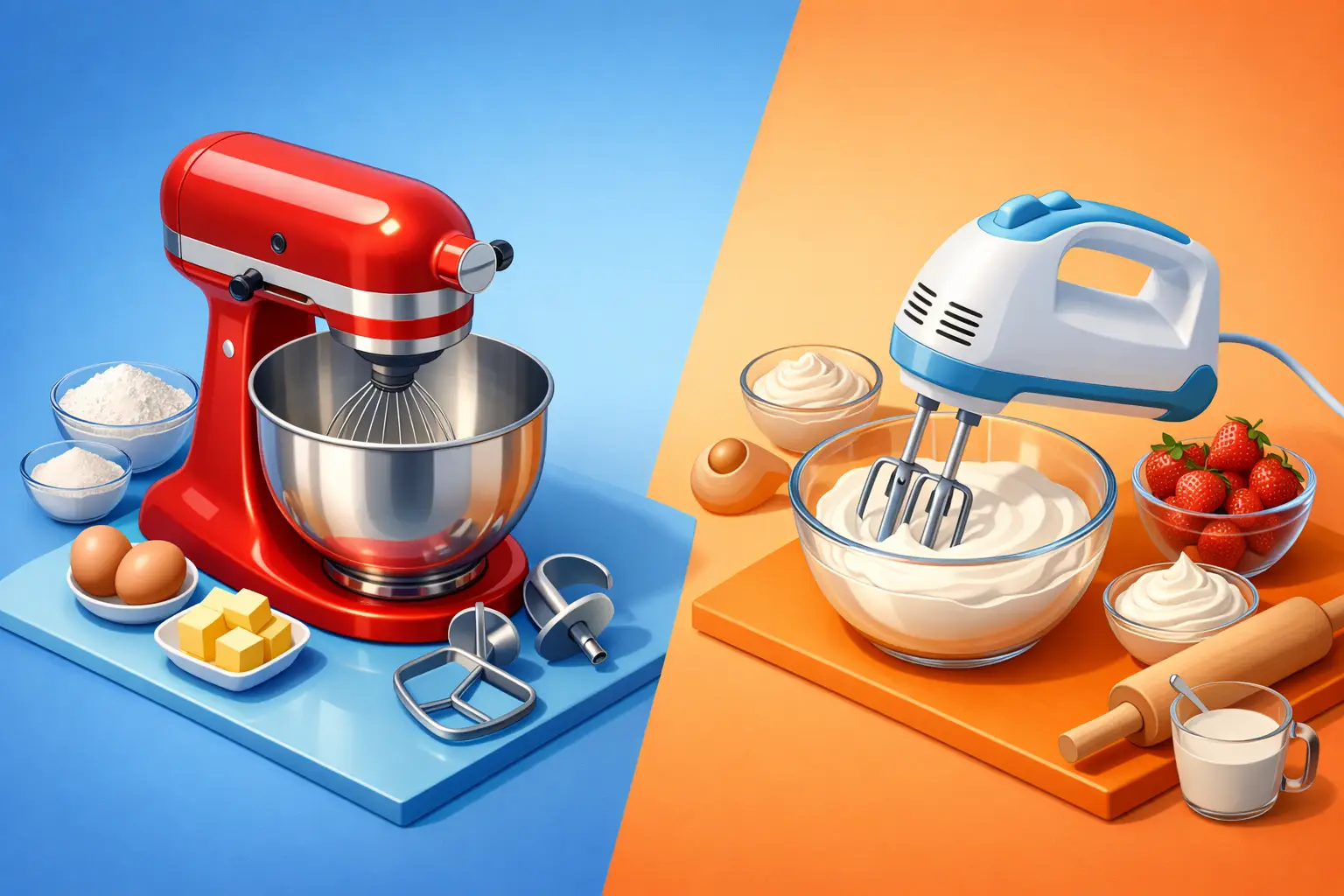
You notice the difference the first time dough pushes back. A light cake batter is easy with almost any mixer, but once you start making bread, large batches, or weekly desserts, the stand mixer vs hand mixer question becomes less about preference and more about performance, space, and value.
For many households, both tools can make sense. But if you are choosing just one, the right answer depends on how often you bake, what you cook, how much kitchen space you have, and whether you want a simple everyday appliance or a heavier-duty machine that handles demanding mixing with less effort.
Stand mixer vs hand mixer: the real difference
A hand mixer is compact, portable, and designed for lighter to medium mixing tasks. It works well for whipping cream, beating eggs, mixing cake batter, preparing mashed potatoes, and handling smaller jobs quickly. You hold it yourself, move it around the bowl, and store it easily after use.
A stand mixer is larger, more powerful, and built for hands-free mixing. It uses a fixed bowl and mixing attachments to process thicker mixtures with more consistency. If you regularly make bread dough, cookie dough, large cake batches, or repeated recipes for family use or small business needs, a stand mixer usually gives better long-term convenience.
That sounds simple, but the trade-off matters. A hand mixer saves money and space. A stand mixer saves labor and handles tougher work.
When a hand mixer makes more sense
If your kitchen is compact, a hand mixer has a clear advantage. Apartment residents, small families, and occasional bakers often do not need the size or power of a stand mixer. A hand mixer is easier to take out, use for a few minutes, and put away without planning around counter space.
It is also the better fit if your mixing tasks are lighter. Pancake batter, frosting, whipped cream, eggs, and basic cake mixtures do not require the extra bulk of a stand mixer. For many users, especially those buying their first mixer, a hand mixer covers the basics at a lower price point.
That lower price matters. If you are furnishing a kitchen and balancing budget across multiple appliances, a hand mixer leaves room to invest in other essentials such as a food processor, chopper, or air fryer. For value-focused buyers, that can be the smarter purchase.
There is also less commitment. A hand mixer is simple to learn, simple to clean, and simple to replace if needed. For households that bake once in a while rather than every week, that convenience often wins.
Best use cases for a hand mixer
A hand mixer is usually the right choice for casual baking, quick prep jobs, and kitchens where storage is limited. It suits users who want speed without giving up cabinet space, and it makes sense for smaller portions where heavy-duty power is unnecessary.
It can also be a practical option for office pantries, serviced apartments, or resale buyers looking for affordable, functional kitchen appliances that appeal to a wide customer base.
When a stand mixer is worth it
A stand mixer earns its place when mixing becomes frequent, heavy, or repetitive. If you bake every week, prepare dough often, or cook in larger quantities, the extra power and stability are not luxuries. They are time-saving features you feel in daily use.
Bread dough is the clearest example. A hand mixer may struggle or overheat with dense dough, while a stand mixer is built for that kind of resistance. The same applies to thick cookie dough, larger batches of batter, and recipes that require long mixing times. Instead of standing and holding the machine, you add ingredients gradually and let the mixer work.
That hands-free benefit matters more than people expect. It makes multitasking easier, especially in busy family kitchens. You can prepare pans, measure the next ingredients, or clean as you go while the machine mixes.
Consistency is another advantage. Because the bowl and attachment system are fixed, a stand mixer often produces more even results. That is useful for serious home bakers and also for small-scale commercial prep where repeatable texture matters.
Best use cases for a stand mixer
A stand mixer is ideal for larger families, enthusiastic home bakers, and users who prepare dough, frosting, batters, and mixtures in bigger volumes. It is also a strong choice for small food businesses, cafe prep support, and trade buyers who need appliances with clear performance value.
If you want one machine that feels more premium in use and more capable over time, a stand mixer is usually the better investment.
Power, capacity, and control
This is where the stand mixer vs hand mixer decision becomes practical.
In general, stand mixers offer higher wattage and stronger torque. That does not just mean faster mixing. It means better performance under load. Thick dough, dense batters, and long mixing sessions put real stress on a motor, and stand mixers are designed to handle it more comfortably.
Hand mixers can still be powerful enough for everyday tasks, but their strength has limits. If your recipes stay on the lighter side, those limits may never matter. If you regularly push into heavy mixtures, they will.
Capacity is just as important. Stand mixers come with bowls designed for bigger batches. That is a major plus for family baking, meal prep, celebrations, or bulk cooking. A hand mixer depends on the bowl you provide, but in practice it is usually paired with smaller to medium quantities because the process becomes less convenient as volume increases.
Control is more balanced. Hand mixers let you move around the bowl and target unmixed areas directly, which can feel more intuitive for small jobs. Stand mixers provide steady, even action, but sometimes you need to stop and scrape the bowl depending on the recipe and attachment design.
Space, storage, and cleaning
Not every kitchen should have a stand mixer. That is the honest answer.
If counter space is limited and storage is already tight, a stand mixer can become frustrating no matter how well it performs. These machines are heavier, bulkier, and less convenient to move in and out of cabinets. They are best for kitchens where they can stay accessible.
A hand mixer is far easier to store. It fits into smaller cabinets, works in shared kitchens, and makes sense for renters or anyone who prefers a clean countertop. That portability is one of its biggest advantages.
Cleaning usually favors the hand mixer, especially after lighter tasks. The beaters come off, the body wipes clean, and you are done quickly. Stand mixers are not difficult to clean, but they involve a bowl, attachments, and a larger machine body. If you use one often, that extra cleanup feels justified. If you bake once a month, it may not.
Price and long-term value
For cost-conscious buyers, hand mixers are the easier entry point. They deliver useful performance at a lower upfront cost, and for many homes that is enough. If you mainly need occasional mixing help, paying more for a stand mixer may not produce real value.
But value is not the same as lowest price. A stand mixer often delivers better long-term return for users who bake often or prepare heavier mixtures. It reduces effort, handles tougher jobs, and can last as a core kitchen appliance rather than a secondary tool.
This is especially important when shopping in a market where buyers want both affordability and dependable ownership. A mixer should not only fit the budget on day one. It should also match the workload so you are not replacing or upgrading too soon. Fast delivery across UAE and official warranty support also matter here, because larger appliances feel like better investments when local after-sales support is clear.
Which mixer should you buy?
Choose a hand mixer if you want an affordable, compact appliance for lighter mixing, smaller batches, and occasional baking. It is practical, easy to store, and a smart fit for apartments, first kitchens, and everyday convenience.
Choose a stand mixer if you bake frequently, work with dough, prepare larger portions, or want stronger performance with less manual effort. It costs more and takes more space, but it pays off in power, consistency, and time savings.
For some buyers, the answer is not about which mixer is better. It is about which one fits the way the kitchen is actually used. A smaller household may get everything it needs from a hand mixer. A growing family or serious baker may quickly outgrow one.
If you are buying for resale or wholesale supply, the decision also depends on your customer base. Hand mixers appeal to budget-driven shoppers and compact homes. Stand mixers appeal to buyers looking for a premium-feeling appliance with visible performance benefits. Retailers like LIGHT PERFECT TRADING L.L.C understand that both categories have strong demand because they solve different kitchen problems.
The best mixer is the one that saves you time without wasting your money or your space. Buy for the recipes you make every week, not the ones you imagine making once a year.