
Blog
Water Dispenser vs Kettle: Which Fits Best?

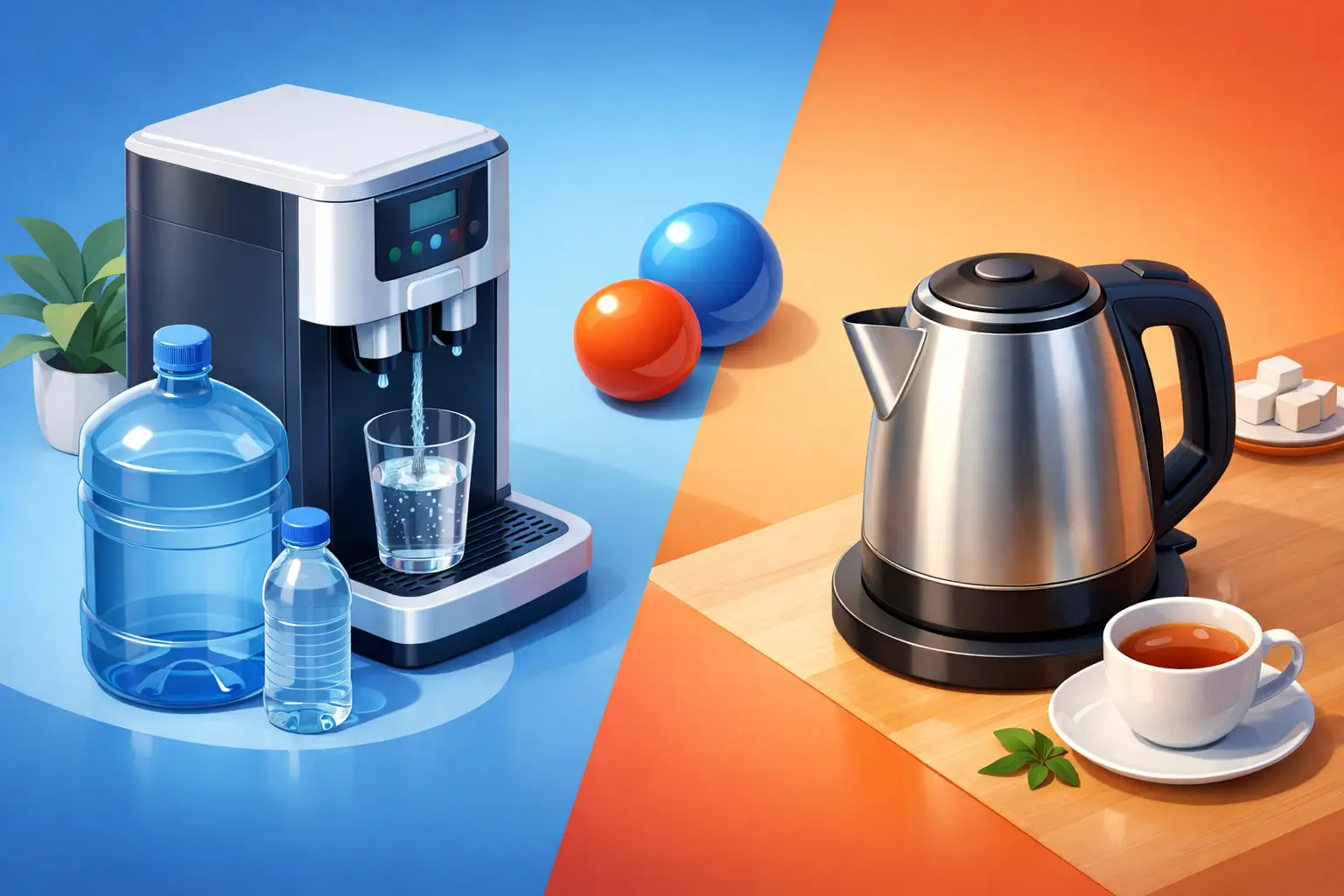
The real question in a busy kitchen or office is not whether you need hot water. It is how often you need it, how fast you want it, and how many people rely on it every day. When comparing water dispenser vs kettle, the better choice usually comes down to usage pattern, capacity, and convenience rather than price alone.
For some buyers, a kettle is the obvious answer. It is compact, familiar, and usually cheaper upfront. For others, a water dispenser makes more sense because it handles repeated use, offers instant access, and often adds cold water function at the same time. If you are buying for a family kitchen, apartment, pantry, reception area, or small business, the difference matters.
Water dispenser vs kettle: the core difference
A kettle is a single-purpose appliance. You fill it, switch it on, wait for the water to boil, and pour. It works well for tea, coffee, instant noodles, and simple cooking tasks. Most households already understand how to use one, and replacement cost is usually low.
A water dispenser is designed for more continuous convenience. Depending on the model, it can provide hot water, cold water, and sometimes normal-temperature water from one unit. Many users choose it because it reduces repeated boiling, saves time during the day, and supports more people without constant refilling.
That is the biggest split. A kettle is built for one cycle at a time. A dispenser is built for repeated daily access.
Which one is faster in real use?
If you only need one or two cups, a kettle can still be fast, especially a high-wattage model. But speed changes when demand increases. In a home where several people make tea in the morning, or in an office where staff use hot water throughout the day, waiting for a kettle over and over becomes less practical.
A hot and cold water dispenser has an advantage here because hot water is typically available on demand. You do not need to refill, reboil, and wait every time. That makes a visible difference in shared spaces.
For one person in a studio apartment, that time saving may not justify the extra appliance. For a family or workplace, it usually does.
Cost matters, but so does value
A kettle often wins on entry price. If your goal is the lowest upfront spend, it is hard to beat. This makes it attractive for students, smaller households, and buyers setting up a kitchen on a tighter budget.
A water dispenser usually costs more at the start, but it can deliver better long-term value for higher-use environments. You are paying for added functionality, larger capacity, and easier daily access. If the appliance serves multiple users every day, the extra cost can feel justified very quickly.
This is also where quality matters. A low-cost appliance that struggles with heating performance or lacks reliable support can become expensive in another way. Buyers in the UAE often look for fast delivery, official warranty, and practical after-sales confidence because replacement delays are frustrating, especially for office or family use.
Energy use: not always as simple as it looks
Many people assume one option is clearly more efficient, but actual usage makes the difference. A kettle heats water only when you turn it on. That can be efficient if you use it a few times a day and only boil what you need.
A water dispenser may consume more ongoing power because it maintains temperature, especially hot and cold models that are active all day. However, that trade-off can still make sense in places with regular use. In a busy office, a dispenser may be more practical than boiling a kettle ten or fifteen times.
So the better option depends on behavior. Low-frequency use favors a kettle. High-frequency shared use favors a dispenser.
Space and placement
A kettle is easier to place. It fits on almost any kitchen counter, stores away when not in use, and does not require much planning. That makes it ideal for compact apartments, small kitchens, or users who want the simplest setup possible.
A water dispenser needs a more permanent spot. Countertop and freestanding models both require room, and bottle-based dispensers need extra space for water storage or replacement bottles. In return, you get a dedicated hydration station that feels more organized for daily use.
For office buyers, this is often a worthwhile trade. For very small homes, the added footprint may be a deciding factor against it.
Safety is a bigger factor than many buyers expect
A kettle is simple, but it still involves lifting and pouring boiling water. In households with children, elderly users, or busy kitchen traffic, spills can happen. Most modern kettles include auto shut-off and boil-dry protection, which help, but pouring remains part of the process.
A water dispenser can reduce handling of freshly boiled water because hot water comes from a tap. Many models also include child safety locks on the hot water function. That can make day-to-day use safer in some settings, especially where multiple people access the appliance.
Still, safety depends on the model and user habits. A poorly placed dispenser or a kettle left near the edge of a counter are both avoidable risks. Buyers should look beyond price and check basic safety features before purchasing.
Water quality and convenience
This is where dispensers often stand out. If you use bottled water with a dispenser, you get a simple all-in-one solution for drinking and hot beverages. In many homes and workplaces, that means fewer separate steps. You fill cups directly for cold water, then use the same appliance for tea or coffee.
A kettle does not solve drinking water access on its own. It only boils what you put in. If your household already has a separate water source or filtration setup, that may not matter. But if you want one appliance that improves overall water convenience, a dispenser offers more range.
For buyers choosing based on function per square foot, that extra versatility can be a strong selling point.
Best choice for home use
For smaller households, occasional tea drinkers, and buyers who want a lower-cost appliance, a kettle remains a smart option. It is easy to use, easy to replace, and enough for many daily routines.
For families, larger households, and people who want both hot and cold access in one machine, a water dispenser often delivers more practical value. It supports busy mornings, guests, children coming in for water, and repeated beverage use without constant reheating.
If your routine includes frequent tea, coffee, baby formula preparation, or instant meals, the convenience gap becomes more noticeable.
Best choice for office and commercial use
In office settings, the answer is usually clearer. A kettle can work for a very small team, but once several staff members use hot water throughout the day, it starts to create delays and repeated effort.
A water dispenser is typically the better fit for offices, reception areas, clinics, staff rooms, and shared business spaces. It looks more organized, handles more demand, and supports both employees and visitors. For resellers and trade buyers, this is also why dispensers are often easier to position as a practical volume product rather than a basic commodity appliance.
When buying for commercial use, warranty support and dependable supply matter just as much as features. That is especially true for UAE buyers who want quick replacement access, consistent stock, and direct wholesale pricing for repeat orders.
What to check before you buy
If you are leaning toward a kettle, focus on capacity, wattage, auto shut-off, boil-dry protection, and build quality. Stainless steel interiors and comfortable handles make a difference over time.
If you are considering a water dispenser, check hot and cold function, tank capacity, safety lock, cooling and heating performance, cleaning access, and overall footprint. For office or larger household use, a model with stable output and easy maintenance is worth prioritizing over the cheapest option.
This is where a retailer with appliance specialization has an advantage. Product details, warranty clarity, and fast delivery across UAE make comparison easier and reduce the risk of choosing on price alone.
So, which one should you choose?
If your main goal is simple boiling at the lowest upfront cost, buy a kettle. If your priority is all-day convenience, multi-user access, and a more functional home or office setup, buy a water dispenser.
There is no single winner in water dispenser vs kettle for every buyer. The right appliance is the one that matches your daily demand, available space, and budget without adding hassle.
A good purchase should make daily routines easier from the first day, whether that means one quick boil for your morning tea or instant hot and cold water ready whenever your home or team needs it.