
Blog
How to Choose an Energy Efficient Air Fryer

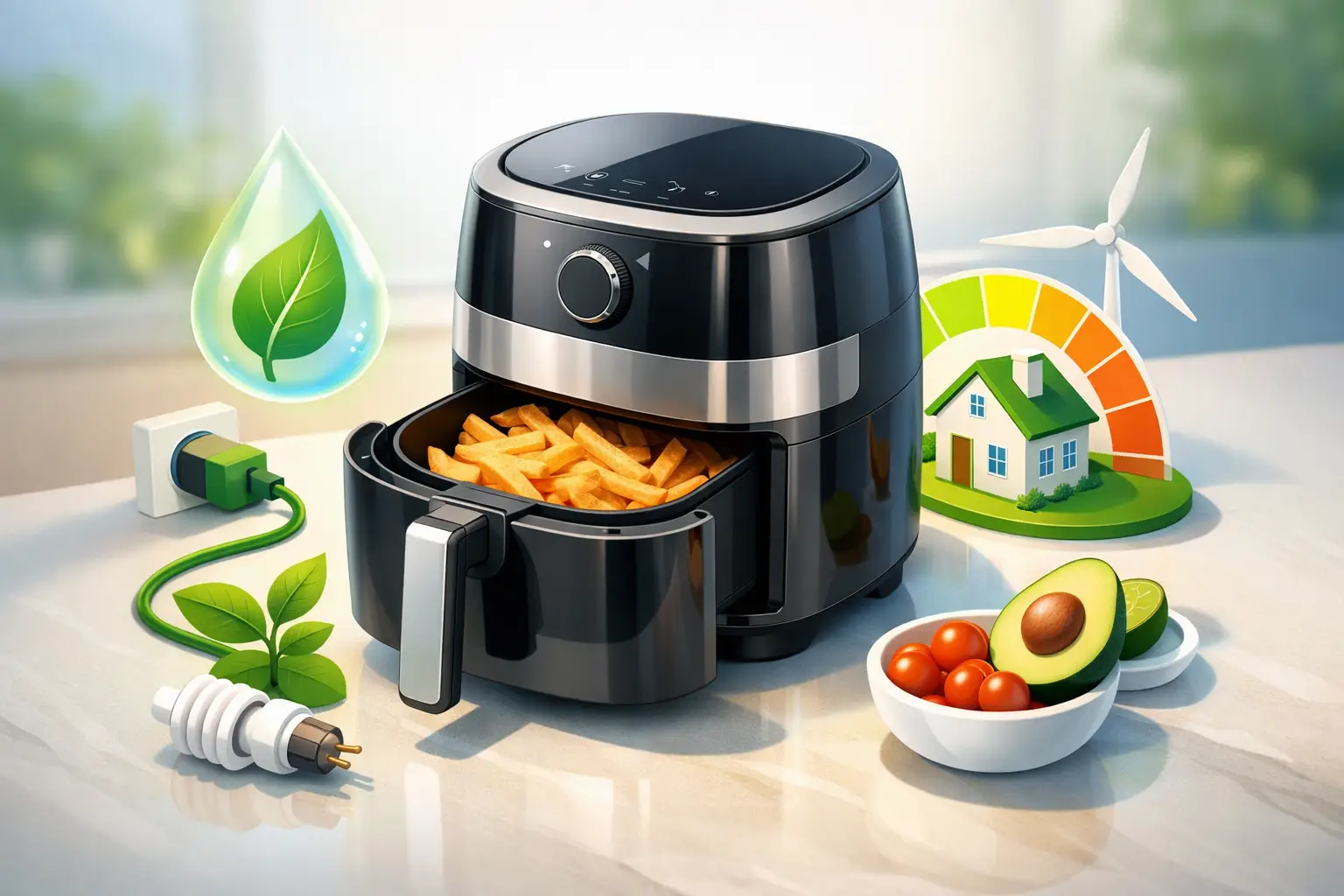
If your kitchen appliance gets used three or four times a week, energy use stops being a small detail. An energy efficient air fryer can help cut cooking time, reduce oven use, and keep everyday meals practical without adding unnecessary power costs. For households, apartment kitchens, offices, and even bulk buyers comparing resale-friendly models, the real question is not just which air fryer cooks well. It is which one gives you the best balance of capacity, speed, and electricity use for the price.
What makes an energy efficient air fryer
Energy efficiency in an air fryer is not only about low wattage. That sounds like the obvious starting point, but a lower-watt unit that cooks slowly can end up using similar energy to a higher-watt model that finishes faster. What matters is how well the appliance turns electricity into consistent heat and circulating airflow.
A good air fryer is efficient when it preheats quickly, reaches cooking temperature without large swings, and cooks evenly in less time than a full-size oven. Compact cooking chambers help. Strong air circulation helps. So does a basket or tray design that exposes more food surface area to the hot air.
In practical buying terms, the best model is usually one that matches your normal portion size. If you regularly cook for one or two people, an oversized machine can waste both counter space and electricity. If you cook for a family, a very small unit may force multiple batches, and that cancels out the energy savings.
Why air fryers usually use less energy than ovens
Most buyers compare air fryers to ovens because that is where the biggest energy difference shows up. A traditional oven heats a much larger cavity, takes longer to preheat, and often keeps running for a longer cooking cycle. An air fryer uses a smaller chamber and focused hot air circulation, so it gets food crisp faster.
That does not mean every air fryer is automatically cheap to run. Usage habits matter. If you overcrowd the basket, food cooks unevenly and needs extra time. If you run repeated batches for a large family meal, power use goes up. Still, for fries, chicken pieces, vegetables, frozen snacks, reheating leftovers, and small daily meals, an air fryer is often the more efficient option.
For buyers who care about monthly operating cost, this matters more than a marketing label. Fast cooking plus smaller heated space is the main advantage.
How to compare wattage without getting misled
Wattage is useful, but it should be read correctly. A 1200W model may look better on paper than a 1700W model, but if the 1700W unit cooks in half the time with better airflow, actual energy use can be competitive. Higher wattage often means faster heat recovery when you open the basket, which can improve performance.
The better approach is to compare wattage alongside basket size, cooking speed, and intended use. For a small household, a mid-range wattage air fryer with a modest capacity often gives the best efficiency. For larger households, going too small creates repeat cycles, and that can use more electricity overall than one larger, slightly higher-watt model.
If you sell appliances in volume or buy for office pantry use, this is also worth noting. Models that look economical but underperform can create more customer complaints than real savings.
A practical wattage range for most buyers
For basic home use, many efficient models fall into the 1200W to 1800W range. At the lower end, they suit smaller portions and lighter use. At the higher end, they usually support larger baskets, faster crisping, and better performance on proteins and frozen foods. Neither end is automatically better. The right choice depends on how much food you cook and how often.
Size matters more than many shoppers expect
Capacity has a direct effect on efficiency. A too-large fryer for one person means heating extra air and extra interior space with every use. A too-small fryer for a family means running back-to-back cycles.
That is why there is no single best energy efficient air fryer for everyone. A studio apartment user making quick dinners has different needs than a family preparing side dishes every evening. A small office may want a unit that reheats and crisps efficiently without taking over the counter. A reseller may prefer popular size ranges that suit the broadest customer base.
For many homes, medium-capacity units are the safest middle ground. They handle daily cooking without the bulk of oversized appliances, and they are usually easier to store, clean, and position in smaller kitchens.
Features that help efficiency in real use
Some features sound premium but do little for energy savings. Others genuinely improve day-to-day performance. Precise temperature control matters because it prevents overcooking and unnecessary extra minutes. A timer with auto shut-off helps avoid wasted power if you step away. Preset programs can be useful if they are accurate, though manual control is still important.
Nonstick baskets and removable trays also support efficiency in an indirect way. When cleaning is easy, users are more likely to keep airflow paths clear and remove grease buildup that can affect cooking performance. Good basket design helps hot air move properly, which shortens cook times.
A viewing window can be helpful if it lets you check food without opening the basket repeatedly. Every time the basket opens, heat escapes and recovery time increases. That is a small detail, but over time it affects results and energy use.
Dual basket models and the trade-off
Dual basket air fryers can be efficient for larger households because they let you cook two foods at once. That can be better than running a small single-basket fryer twice. But for light users, they may be more appliance than necessary. They also take more space and may cost more upfront. Efficiency is not only about operation. It is also about buying the right format for your actual routine.
How to use an air fryer more efficiently
Even a well-designed unit can waste power if used poorly. The easiest gain comes from cooking the right amount in the right layout. Do not overfill the basket, but do not run the appliance half empty for no reason if you can combine items with similar cook times.
Skip unnecessary preheating unless the recipe really needs it. Many foods cook well without a long preheat. Shake or turn food when needed so it cooks evenly the first time. Use the shortest time range suggested, then add a minute or two only if required. This avoids the common habit of setting extra time just to be safe.
Batch planning also helps. If you are already using the fryer, cook the second item right after the first while the unit is still hot. That reduces recovery time. For office or family use, this can make a noticeable difference during busy evenings.
Buying for home versus buying for resale
Home shoppers usually focus on cooking results, easy cleaning, price, and size. Wholesale or resale buyers need to think one step further. They should look for size categories that move well, practical wattage ranges, simple controls, and features that are easy to explain at the point of sale.
Warranty support matters too. Air fryers are high-use kitchen appliances, and buyers want confidence after purchase. That is one reason value-focused retailers such as LIGHT PERFECT TRADING L.L.C position warranty-backed models and direct wholesale pricing as part of the offer. For trade customers, reliable after-sales support can matter as much as the initial margin.
What to look for before you buy
The strongest buying checklist is simple. Check the wattage, but do not stop there. Compare the capacity to your real meal size. Look at basket shape, controls, temperature range, and cleaning convenience. Ask whether the model is meant for quick daily cooking or occasional larger batches.
Also consider your kitchen setup. In smaller homes and apartments, countertop footprint is part of efficiency. A compact appliance that gets used regularly often delivers more value than a larger machine that stays in the box because it is inconvenient.
Price should be judged against use frequency. A dependable model with better airflow, solid construction, and official warranty support can be the smarter buy than the cheapest option on the shelf.
An energy efficient air fryer is not just the one with the lowest number on the spec label. It is the one that cooks your normal meals fast, evenly, and without wasting power, space, or money. Buy for the way you actually cook, and the savings tend to follow naturally.