
Blog
Food Chopper vs Processor: Which Fits?

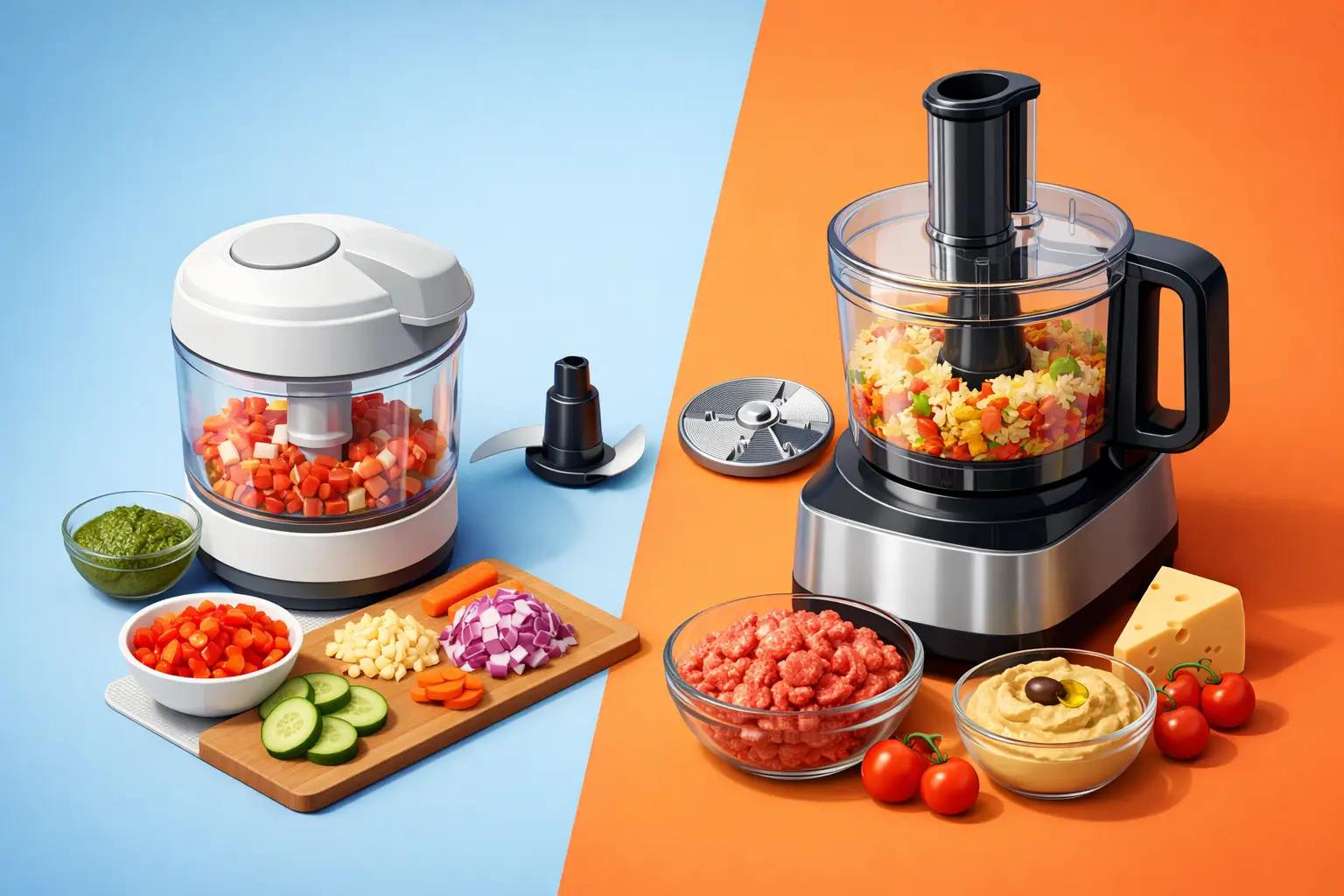
If you have ever stood in your kitchen with onions on the counter, herbs in one hand, and a full dinner plan in your head, you already know the real question behind food chopper vs processor. It is not just about features. It is about how much prep you do, how much space you have, and whether you want a quick helper or a more complete kitchen machine.
For many households, both appliances sound similar until they are used side by side. A food chopper is usually the faster, smaller, and simpler option for basic prep. A food processor is the more powerful choice for bigger batches and more demanding tasks. The better buy depends on your routine, not just the product label.
Food chopper vs processor: the core difference
A food chopper is built for straightforward jobs. Think chopping onions, garlic, chilies, nuts, herbs, and small portions of vegetables. It is compact, easy to store, and usually quicker to wash after use. If your goal is to save time on repetitive knife work, a chopper often does exactly what you need without taking over the countertop.
A food processor is made for a wider range of tasks. In addition to chopping, it can usually slice, shred, puree, and mix larger quantities. Many models include multiple attachments, stronger motors, and bigger bowls. That makes them more versatile, but also bulkier and typically more expensive.
So when people compare food chopper vs processor, the real distinction comes down to capacity and capability. A chopper is focused. A processor is multifunctional.
When a food chopper makes more sense
If you cook daily but keep things simple, a food chopper can be the smarter purchase. It handles the jobs that slow people down most, especially during weekday meal prep. Chopping onions for curry, mincing garlic for marinades, or preparing tomatoes and herbs for a quick sauce becomes faster with less mess.
This matters even more in apartments, small kitchens, and shared spaces where storage is limited. A compact appliance that can be pulled out, used in two minutes, and cleaned quickly has real value. For many buyers, that convenience matters more than owning a machine with extra functions they rarely use.
Price is another advantage. A food chopper usually gives strong everyday value because you are paying for one main job done efficiently. For shoppers who want practical performance at an accessible price, this can be the better fit.
There is a trade-off, of course. Most choppers are not ideal for dough, heavy purees, or large-volume slicing and shredding. If you regularly prep for a big family or batch-cook for the week, the smaller bowl may start to feel limiting.
Best use cases for a food chopper
A food chopper works best for quick prep, smaller servings, and cooks who want a low-effort appliance. It is especially useful for salsa ingredients, chopped vegetables, nuts, herbs, breadcrumbs, and dip bases. It also suits buyers who want fast delivery, direct value, and an appliance that does not need a learning curve.
For small resellers or wholesale buyers, choppers also have broad appeal because they match a wide range of customer needs. They are affordable, easy to demonstrate, and easy to move in volume.
When a food processor is the better buy
A food processor starts to justify its price when your kitchen work goes beyond basic chopping. If you prepare large meals, host often, or like making food from scratch, the extra power and capacity can save serious time. Slicing cucumbers, shredding carrots, mixing dough, blending hummus, or processing bigger quantities of vegetables is where a processor pulls ahead.
For families, this difference becomes practical very quickly. Preparing ingredients for multiple lunches, chopping vegetables for soup, or making a large batch of sauce is easier in a larger bowl with a stronger motor. Instead of stopping to empty and restart, you can finish prep in one run.
A processor also suits users who want one machine to replace several manual tasks. That can be a smart buying decision if countertop space is available and the extra functions will be used regularly. In that case, the higher upfront cost may deliver better long-term value.
The downside is that a processor is often larger, heavier, and less convenient for tiny jobs. If you only need half an onion chopped, pulling out a full-size processor can feel like too much machine for too little work.
Best use cases for a food processor
A food processor is ideal for bigger batches, more advanced meal prep, and buyers who want multifunction performance. It is a strong choice for slicing vegetables, shredding cheese, mixing pastry dough, making dips, pureeing ingredients, and preparing meals for larger households.
For business buyers, processors can also appeal to customers who want premium-feeling kitchen equipment with broader functionality. That makes them a strong category for upselling when shoppers are comparing value instead of just entry price.
Size, power, and bowl capacity matter more than labels
Not every chopper is weak, and not every processor is high-performance. That is why product specs matter. Motor power, blade quality, bowl size, and material construction all affect daily use more than the name on the box.
A compact chopper with a solid motor can outperform a poor-quality processor in basic chopping tasks. On the other hand, a processor with a wide feed tube, stable base, and multiple blades can make meal prep much more efficient than a basic mini chopper.
When comparing options, buyers should focus on what they actually prepare every week. If the appliance will mainly chop onions, garlic, and herbs, oversized capacity may not be useful. If the appliance needs to slice, shred, and puree in one session, a processor becomes the more practical investment.
Cleaning and storage are part of the buying decision
This is where many people make the wrong choice. They buy for maximum features, then avoid using the appliance because cleanup is annoying or storage is inconvenient.
Food choppers usually win on ease. Fewer parts, smaller bowls, and simpler assembly make them appealing for everyday use. If speed and convenience are the priority, this can matter as much as motor power.
Food processors require more room and usually have more components. That is not necessarily a problem if you use those features often. But if the machine spends most of its life in a cabinet because it is too bulky for daily prep, it may not deliver the value you expected.
For practical buyers, the best appliance is the one that gets used regularly, not the one with the longest feature list.
Food chopper vs processor for different buyers
For singles, couples, and apartment kitchens, a food chopper is often enough. It covers the most common prep tasks, stores easily, and keeps cost under control. It is also a strong option for first-time appliance buyers who want simple performance without paying for features they may not need.
For families and frequent home cooks, a food processor often makes more sense. The larger capacity and wider task range can save time across the week, especially when preparing multiple meals or handling different ingredients in one session.
For resellers and trade buyers, it depends on customer demand. Choppers usually move well because they are affordable and practical. Processors attract buyers looking for a more complete kitchen solution. A balanced product mix often works best because these appliances serve different purchase priorities.
Which one gives better value?
Value is not always the lower price. Value means matching cost to real use.
If you want compact convenience, quick prep, and lower spend, a food chopper often gives better value. If you want versatility, larger capacity, and more functions in one appliance, a food processor may be worth paying more for.
This is why many shoppers in the UAE look for practical appliances with clear specifications, official warranty coverage, and fast delivery instead of buying only on appearance. A well-chosen appliance should save time, hold up to regular use, and feel like a smart purchase months after checkout. That is exactly why retailers such as LIGHT PERFECT TRADING L.L.C focus on functional kitchen products that balance performance, price, and dependable ownership.
If your prep is small and frequent, keep it simple and choose the chopper. If your cooking is bigger and more varied, go for the processor. The right choice is the one that fits your kitchen on a busy day, not just your wishlist.